Chicken noises, what is my hen trying to say?
Clucks, Chirps, and Squawks: Decoding the Complex Secret Language of Chickens
To the uninitiated observer, a backyard chicken coop might seem like a place of simple, repetitive noise. You have your morning cluck, your midday chatter, and the occasional triumphant outburst after laying an egg. However, if you spend time sitting quietly among your flock, you begin to realize that you are not merely hearing noise; you are listening to a sophisticated, ancient, and highly complex language.
Chickens are not solitary birds; they are intensely social animals whose survival depends on group cohesion and instant communication. Over millennia of evolution, they have developed a vast vocabulary of over 30 distinct vocalisations. Each call has a specific meaning, varying in pitch, rhythm, and intensity, designed to convey critical information about food, danger, social status, and maternal care.
To truly understand your flock, you must learn to translate their secret language. Here is an in-depth guide to the most common and fascinating sounds in the "poultry dictionary."
I. The Social Currency: Keeping the Flock Together
The majority of chicken vocalisations are used for everyday flock management. These sounds maintain social bonds, reduce anxiety by confirming the location of others, and coordinate group movement while foraging.
1. The Contact Cluck (The "Bok")
This is the most common sound you will hear. It is a soft, rhythmic, low-volume vocalisation that hens use constantly while foraging. Think of it as the auditory equivalent of "I'm here," or "All is well." When a hen is separated from the group, her clucks become louder and more urgent ("Where are you?"). When the flock is together, these soft clucks create an acoustic blanket of security.
2. The Broody Grunt / Murmur (The "Purr")
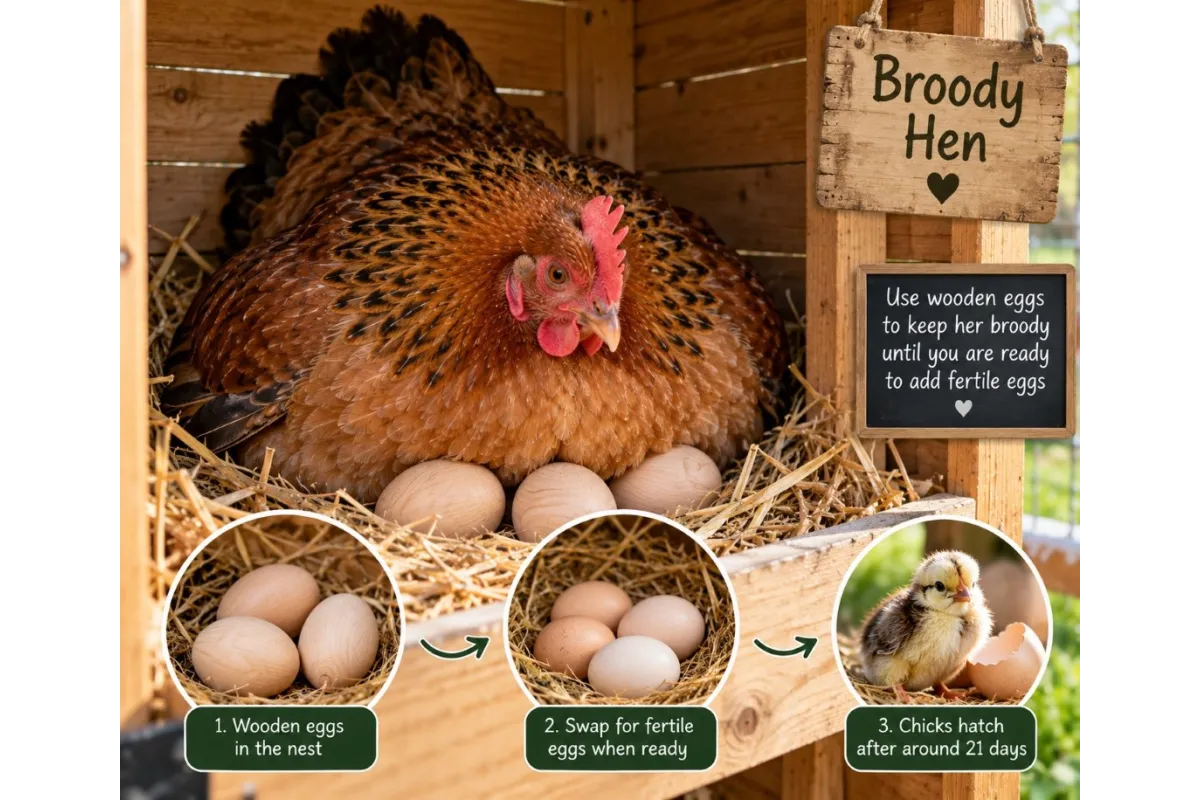
When a hen's hormones shift and she decides to sit on a clutch of eggs, her demeanor changes entirely, and so does her voice. She emits a low, continuous, soft trilling sound—much like a cat purring. This vocalisation serves two vital purposes: it communicates her deep contentment to herself and acts as a calming, hypnotic homing beacon for the developing chicks inside the eggs beneath her.
3. The Distress "Peep" (The Lost Chick Call)
Perhaps the most heart-wrenching sound is the high-pitched, rapid, piercing whistle of a lost chick. Unlike the soft, contented cheeping of a chick warm under its mother, this cry is urgent and repetitive. It signals to the mother hen that the chick is cold, frightened, or physically trapped. The hen will immediately stop what she is doing and run toward the sound, emitting a frantic assembly call.
4. The Submissive Squawk / Whimper
Within the flock’s rigid hierarchy (the pecking order), lower-ranking birds must acknowledge their status to avoid conflict. When a dominant hen approaches a subordinate to displace her from a sunbeam or a pile of feed, the subordinate bird may emit a high-pitched, descending squeak or whimper while quickly moving away. It is the vocal equivalent of "I yield, I mean you no harm."
II. The Danger Signals: Specific Threats Require Specific Calls
Perhaps the most impressive part of the chicken's vocabulary is their ability to distinguish between types of threats. A mother hen doesn't just have one "alarm" sound; she has a specific "dialect" for danger from above versus danger on the ground. This auditory warning system is so precise that other prey species, like squirrels, have learned to eavesdrop on chickens to know when to hide.
5. The Aerial Predator Alarm (The "Seet" Call)
If a hawk or owl appears overhead, the flock must react instantly. You will hear a high-pitched, single, long, thin whistle, often described as seeeeet. This sound is an acoustic marvel; because of its high frequency, it dissipates quickly in the air, making it extremely difficult for the aerial predator to pinpoint which chicken made the sound. Upon hearing it, the entire flock instantly freezes, blending into the environment, or dives for dense ground cover.
6. The Ground Predator Alarm (The "Krrr" / Staccato Squawk)
When a threat approaches on the ground—like a fox, raccoon, neighborhood cat, or a stranger walking into the coop—the alarm changes dramatically. The sentinel chicken will emit a rapid, loud series of stuttering clucks and squawks, often accompanied by frantic wing flapping and an erect, upright posture. This call is designed to be loud and erratic to draw the predator's attention to the sentinel, while alerting the rest of the flock to move away to safety.
7. The "All-Clear" Trill
After a threat has passed, the flock doesn't just resume normal activity immediately. You will hear a specific, soft, rolling trill, starting low and rising in pitch. This is the sentinel telling the others that the immediate danger is gone and it is safe to come out of hiding.
III. The Family Connection: Maternal and Offspring Communication
The bond between a hen and her chicks is built on vocalisation, beginning even before the chicks break free from the shell.
8. Pipping Calls / Maternal Egg Clucks
A day or two before hatch, the chick will begin making soft peeping sounds (pipping) from inside the porous shell. The mother hen, sitting patiently above, will respond with soft, low-volume clucks. This allows the chick to imprint on the specific sound of her voice before it has even seen the world.
9. The Assembly Call / The "Tidbitting" Call
This is the most joyful call a keeper can witness. When a mother hen finds a high-value treat—like a juicy grub, a spider, or a pile of cracked corn—she doesn't eat it herself. Instead, she stands over the food and uses a rapid, staccato, clicking cluck, while pecking at the ground and dropping the food repeatedly. This is an imperative command to her chicks: "Come here immediately; I have found nutrition for you." It teaches the chicks what is edible and strengthens their bond.
10. The Alarm Stomp and Cluck
If a mother hen detects a threat near her brood—like a rat snake or a curious dog—she will emit a sharp, low-volume cluck that stops the chicks dead in their tracks. Simultaneously, she may stomp one foot on the ground. The chicks immediately freeze and attempt to camouflage themselves in leaf litter or grass, becoming perfectly still while the mother faces the threat.
IV. Conflict, Contentment, and Celebration
Finally, there are the sounds of everyday social dynamics in the coop—from territorial disputes to the final sighs of the day.
11. The Celebratory "Egg Song"
If you keep hens, you are undoubtedly familiar with the egg song. It is a loud, rhythmic, escalating cackle that often starts as a simple bok... bok... bok... and builds into a crescendo of BOK-BOK-BOK-DA-GOCK! For a long time, people thought this was the hen announcing, "I laid an egg! Come look!" Ethologists now believe the primary purpose is actually confusion. By making such a raucous, erratic racket right after laying, the hen draws a potential predator's attention to herself and away from the actual nest, which contains her vulnerable, scentless eggs. It is a brilliant, evolutionary distraction tactic.
12. The Aggressive Growl
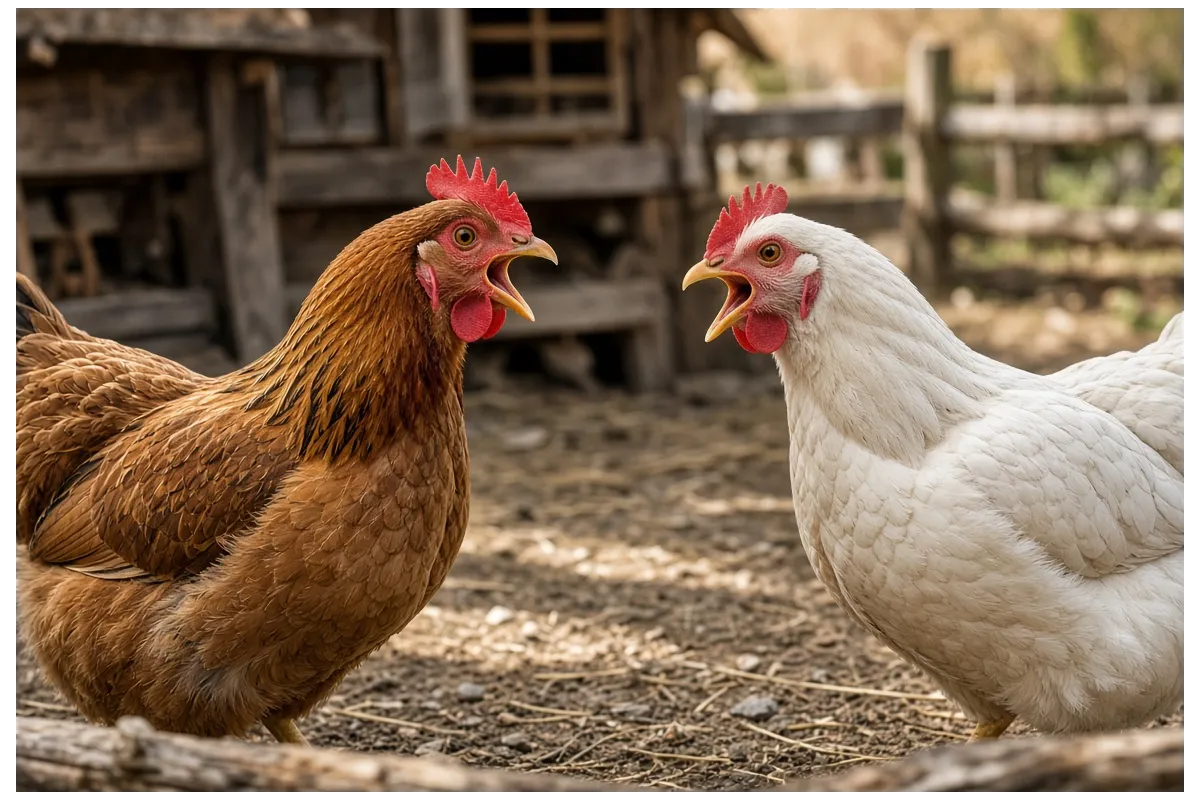
If a hen is defending a prime nesting spot or her chicks, she will not back down. She will lower her head, ruffle her neck feathers, and emit a low, guttural growl, often followed by a sharp hiss if the intruder continues to approach. This is a final warning before she launches an attack with her beak and spurs.
13. The Pre-Roosting "Sleepy Trill"
As evening falls and the flock begins to settle onto the roosting bars, you will hear a chorus of soft, low-volume trills and peeps. This is not about danger or food; it is the equivalent of a human sigh at the end of a long day, signalling security, comfort, and contentment within the safety of the coop before sleep.
14. The Screech of Pure Terror
Hopefully, you rarely hear this. If a chicken is suddenly grabbed by a predator or violently bullied and pinned by another flock member, they will emit a single, sharp, piercing, high-volume screech. It is an involuntary sound of pure panic and pain, designed to startle an attacker and summon help from the rest of the flock.
Conclusion
The next time you are in the garden with your chickens, take a moment to mute the world and just listen. What you once thought was simple barnyard noise is actually a sophisticated, living language. You will hear the soft purr of a mother hen, the frantic alarm of a sentinel spotting a hawk, or the raucous cackle of a job well done. By learning to decode these 30-plus vocalisations, you are not just keeping chickens; you are participating in their complex society.