Toxic Foods for Chickens: What Should You Never Feed Your Flock?
Toxic Foods for Chickens: What Should You Never Feed Your Flock?
Chickens are famously enthusiastic eaters. Give them access to a garden and they'll happily scratch around looking for insects, seeds and vegetation, while many will come running the moment they spot their keeper carrying a bowl of treats.
Although chickens can safely eat a surprisingly wide variety of foods, not everything in our kitchens or gardens is suitable for them. Some foods can cause digestive problems, while others contain substances that can be toxic when consumed in sufficient quantities.
Knowing what not to feed your chickens is therefore an important part of responsible chicken keeping.
Avocado
Avocado is one of the foods commonly associated with toxicity in poultry. The skin, stone, leaves and other parts of the avocado plant can contain persin, a substance that can be harmful to birds.
Rather than trying to separate supposedly safer portions of the fruit from the parts containing higher concentrations, the simplest approach is to avoid giving avocado to chickens altogether.
Chocolate and Cocoa
Chocolate should never be deliberately fed to chickens.
Chocolate and cocoa contain theobromine and caffeine, compounds that can be toxic to a number of animals, including birds. Dark chocolate and cocoa products can contain particularly high concentrations.
Keep chocolate cakes, biscuits, sweets and other chocolate-containing leftovers well away from your flock.
Raw or Dried Beans
Beans require a little explanation because properly cooked beans and raw beans are very different.
Raw and undercooked dried beans can contain high concentrations of lectins, including phytohaemagglutinin. These compounds can be harmful and potentially dangerous.
Don't throw dried beans or partially cooked beans into your chicken run. Beans need to be thoroughly cooked before they should even be considered as a treat.
Green Potatoes
Potatoes that have turned green, together with potato sprouts and the green parts of the potato plant, can contain increased concentrations of glycoalkaloids such as solanine.
For this reason, green or sprouting potatoes should not be fed to chickens.
The same principle applies to garden access. If you're growing potatoes, don't deliberately allow chickens to consume the foliage.
Green Tomato Plants
Ripe tomatoes can be enjoyed by chickens in moderation, but that doesn't mean the entire tomato plant is suitable.
Tomatoes belong to the nightshade family. The leaves, stems and unripe green parts of the plant contain compounds that you don't want your chickens consuming in significant quantities.
If your flock free ranges around a vegetable garden, protecting tomato plants is therefore sensible—for the chickens as well as the tomatoes!
Rhubarb Leaves
Rhubarb leaves should be kept away from chickens.
The leaves contain high concentrations of oxalic acid and related compounds and aren't suitable poultry food.
If you grow rhubarb in an area your chickens can access, fencing it off is the safest option.
Mouldy or Spoiled Food
One of the most important rules is extremely simple:
If you wouldn't consider the food fresh enough to eat yourself, don't use your chickens as a disposal system.
Mouldy foods can contain harmful mycotoxins. Spoiled food can also harbour potentially dangerous bacteria.
This includes mouldy bread, rotten fruit, damp or mouldy chicken feed and food scraps that have been sitting around for too long.
Chicken feed should always be stored somewhere cool and dry in a secure container.
Very Salty Foods
Chickens need sodium as part of a balanced diet, but their formulated poultry feed already provides the nutrients they require.
Foods containing excessive quantities of salt can cause serious problems if enough is consumed.
Avoid deliberately feeding your flock very salty processed foods, heavily salted leftovers or salty snacks.
Fresh, clean drinking water should also be available at all times.
Highly Processed and Sugary Foods
Not every food that's unsuitable for chickens is immediately poisonous.
Cakes, sweets, crisps, heavily processed foods and sugary snacks have very little nutritional value for your flock and can displace the balanced feed they actually need.
Treats should be exactly that—treats rather than the main diet.
Be Careful With Kitchen Scraps
In the UK, there's another important consideration.
It is generally illegal to feed catering waste to farmed animals, including chickens, and this can apply to household kitchen waste too. The restrictions are designed to reduce the risk of diseases being introduced through food waste.
So rather than thinking of chickens as a convenient way of disposing of leftovers from the kitchen, concentrate on providing appropriate poultry feed and suitable treats that comply with the rules.
Don't Forget About the Garden
Potentially harmful foods don't only come from the kitchen.
Free-ranging chickens are curious and will investigate flower beds, compost heaps, fallen berries and vegetable patches.
Various ornamental plants can be poisonous, including plants such as yew, foxglove and certain bulbs. Chickens often instinctively ignore unpleasant plants, but you shouldn't rely on this behaviour to keep them safe.
It's worth identifying what's growing in any area your flock can access.
What Should Chickens Eat?
The safest foundation for your chickens' diet is straightforward: a nutritionally balanced poultry feed appropriate for their age and stage of life.
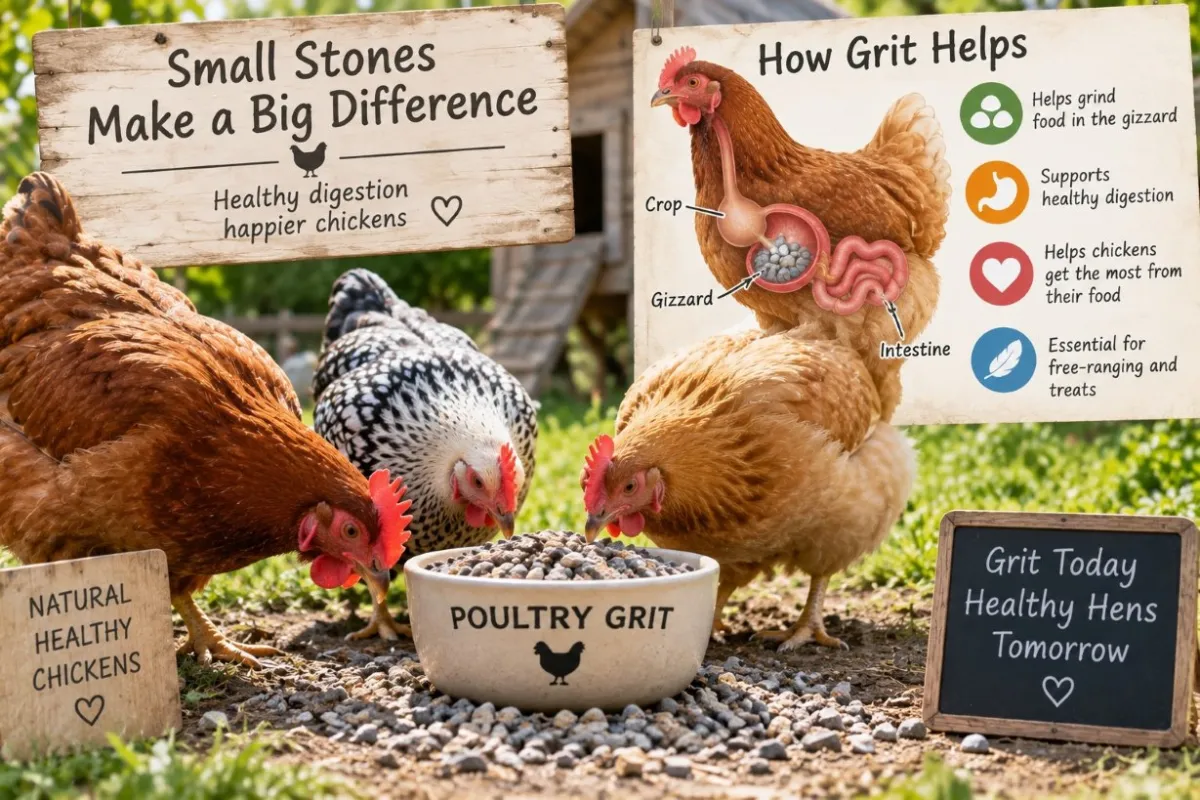
For adult laying hens, this will usually mean a good-quality layers feed. Chickens should also have constant access to fresh drinking water and appropriate grit, with a separate source of calcium such as oyster shell available for laying hens where required.
Suitable treats can add variety and enrichment, but they shouldn't replace their main feed.
When in Doubt, Leave It Out
Chickens may enthusiastically attempt to eat something, but enthusiasm doesn't necessarily mean that food is good for them!
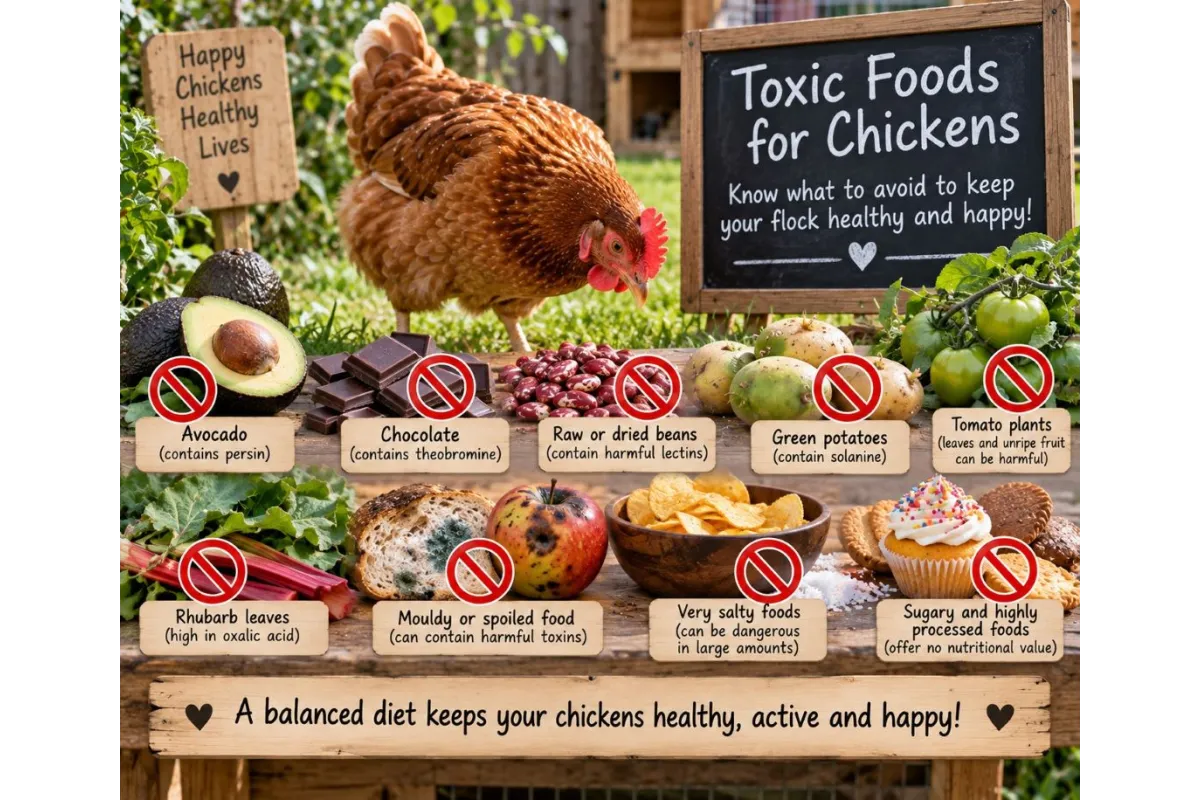
Avoid avocado, chocolate, raw dried beans, green potatoes, rhubarb leaves, mouldy foods and excessively salty or processed foods, and take care with potentially toxic plants around the garden.
If you suspect one of your chickens has eaten something poisonous, remove access to it immediately and contact a poultry-experienced vet for advice, particularly if the bird appears weak, unsteady, unusually quiet, has breathing difficulties or develops digestive problems.
A little care over what goes into the chicken run can go a long way towards maintaining a healthy, active and happy flock.