How Much Does It Cost to Keep Chickens
How Much Does It Cost to Keep Chickens in the UK?
Keeping chickens at home can be incredibly rewarding. Fresh eggs are an obvious attraction, but for many people, the real enjoyment comes from watching their flock scratching around the garden, learning their individual personalities and discovering just how entertaining chickens can be.
Before buying your first hens, however, it's sensible to understand how much keeping chickens is likely to cost in the UK.
The good news is that once you've purchased your coop, run and basic equipment, the everyday costs of keeping a small flock can be relatively manageable. However, there are ongoing expenses such as feed, bedding and healthcare that should be considered.
How Much Do Chickens Cost?
The chickens themselves can actually be one of the least expensive parts of getting started.
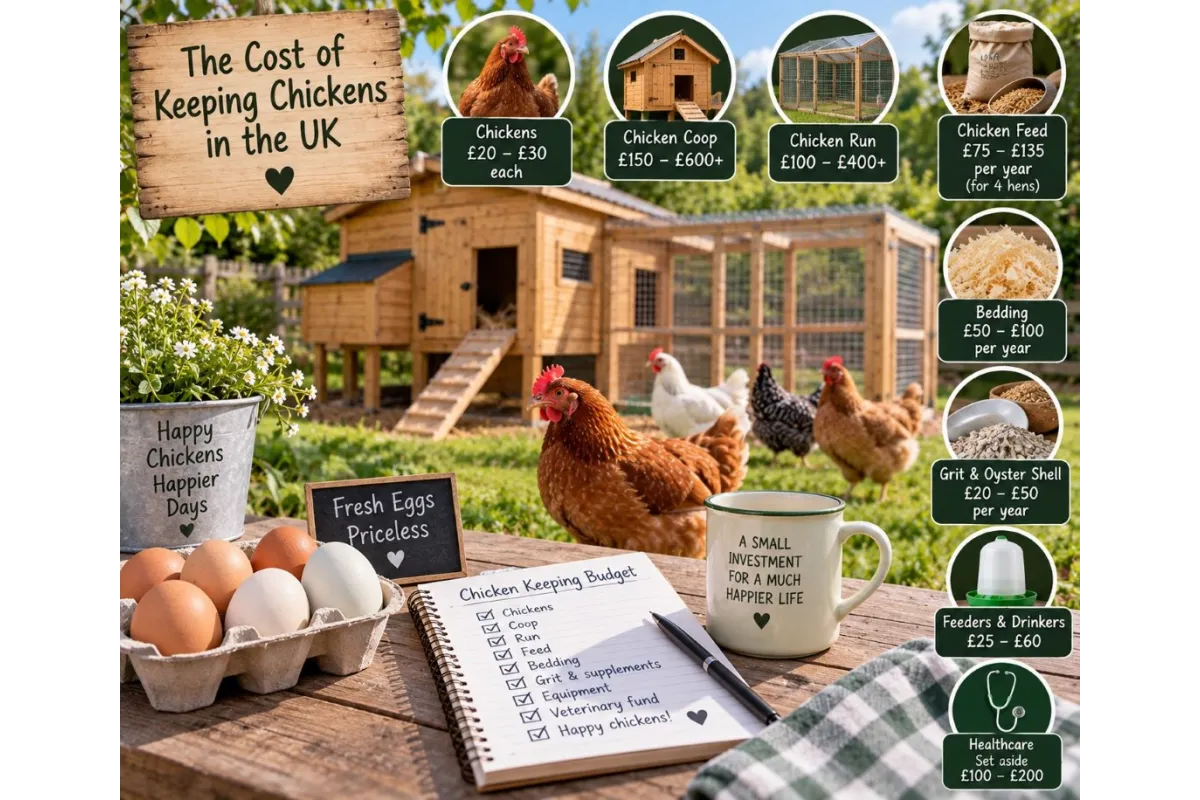
Depending on breed, age and availability, a typical point-of-lay hen might cost somewhere around £20–£30, although unusual pure breeds and specialist coloured-egg-laying chickens can cost considerably more.
For a starter flock of four chickens, budgeting approximately £80–£120 for the birds themselves would therefore be reasonable.
Remember that chickens are naturally social animals and should be kept with other chickens rather than alone.
Buying a Chicken Coop
Your chicken coop is likely to represent one of your biggest initial expenses.
Prices vary enormously according to size, materials and construction. You might find smaller wooden chicken houses starting from approximately £150–£250, while larger, better-built or more sophisticated coops can cost £300–£600 or considerably more.
It's tempting to choose the cheapest coop available, but this can sometimes prove to be false economy.
A well-constructed chicken house should provide good ventilation, protection from the weather and sufficient space while also being relatively easy to clean.
Most importantly, it needs to help keep your chickens safe from predators.
Don't Forget the Chicken Run
Unless you already have a suitable secure enclosure, you'll also need to budget for a chicken run.
Depending on its size and construction, this could cost anywhere from around £100 to several hundred pounds.
A large walk-in enclosure with a covered roof will naturally cost more than a small attached run, but it can make everyday chicken keeping considerably easier.
Security is particularly important. Strong welded wire mesh provides considerably better protection than lightweight chicken wire.
It can also be worth creating an anti-digging mesh skirt or buried perimeter around the enclosure to discourage predators from digging underneath.
Chicken Feed Costs
Once your initial setup is complete, chicken feed will probably become your biggest predictable ongoing expense.
An adult laying hen will typically consume somewhere around 100–120g of feed per day, although consumption varies with breed, size, season and how much suitable forage is available.
Four hens could therefore eat approximately 145–175kg of feed per year.
If a 20kg bag of layers pellets costs approximately £10–£15, you could be looking at somewhere around £75–£135 per year for your flock's main feed.
Premium, organic or specialist feeds will increase this figure.
Remember that treats and mixed corn should be extras rather than replacements for a nutritionally balanced chicken feed.
Bedding and Cleaning
Bedding is another regular expense.
Chicken keepers use various materials including wood shavings, hemp and chopped straw. How much you'll need depends on the size of your coop, the number of chickens and your cleaning routine.
For a small flock, budgeting approximately £50–£100 per year for bedding and general cleaning supplies provides a useful starting point.
Keeping bedding dry is particularly important during the British winter when persistent wet weather can make chicken keeping more challenging.
Grit and Oyster Shell
Chickens need access to appropriate grit.
Insoluble grit helps chickens grind food within their gizzard, while laying hens also need sufficient calcium to produce strong eggshells.
Many keepers provide oyster shell separately so hens can consume additional calcium when required.
These products aren't particularly expensive, but they should still be included when calculating your overall costs.
You might allow approximately £20–£50 per year for grit, oyster shell and similar basic supplies.
Feeders and Drinkers
You'll need suitable equipment for providing your flock with food and clean drinking water.
A basic feeder and drinker setup could cost approximately £25–£60, although there are many more sophisticated options available.
Larger feeders, automatic drinking systems and treadle feeders can cost considerably more but may offer advantages such as reducing wasted feed or making daily management easier.
It's also useful to have a spare drinker available, particularly during freezing winter weather.
Healthcare and Veterinary Costs
This is probably the hardest chicken-keeping expense to predict.
Some chickens remain remarkably healthy throughout their lives, while others may develop illnesses or suffer injuries requiring veterinary treatment.
It's therefore sensible to maintain an emergency veterinary fund rather than assuming you'll never need one.
Putting aside at least £100–£200 provides a useful starting point, although veterinary investigation and treatment can sometimes cost considerably more.
Optional Extras
This is where chicken keeping can become surprisingly expensive!
Once you've got your chickens, you'll discover all sorts of useful accessories that can make looking after them easier or more enjoyable.
You might decide to buy an automatic chicken coop door, additional feeders and drinkers, dust baths, enrichment products, poultry fencing, run covers, cameras or additional predator protection.
An automatic coop door alone could add somewhere around £60–£150 to your setup.
None of these extras necessarily needs to be purchased immediately. Start with the essentials and add accessories as you discover what works best for your flock.
A Realistic First-Year Chicken-Keeping Budget
For a small flock of four hens, your approximate first-year costs might look something like this:
| Expense | Approximate Cost |
|---|---|
| Four point-of-lay hens | £80–£120 |
| Chicken coop | £200–£500 |
| Secure chicken run | £150–£400 |
| Feeder and drinker | £25–£60 |
| First year's feed | £75–£135 |
| Bedding | £50–£100 |
| Grit, oyster shell and supplies | £20–£50 |
| Approximate total | £600–£1,365+ |
These figures are only a guide. Someone who builds their own chicken run and already has suitable materials could spend significantly less, while a premium coop and large walk-in enclosure could easily take the initial investment beyond £1,000.
What Does It Cost After the First Year?
The good news is that the first year is normally the most expensive because that's when you're purchasing the coop, run, feeders and drinkers.
Once those are paid for, the main ongoing expenses are feed, bedding, grit, cleaning products, repairs and healthcare.
For a small flock of around three or four hens, allowing approximately £250–£500 per year for normal running costs is a sensible starting budget.
It's worth keeping some additional money available for unexpected veterinary treatment or repairs to the coop and run.
Will Keeping Chickens Save Money on Eggs?
If your only objective is saving money, keeping chickens probably isn't going to beat buying inexpensive supermarket eggs.
Once you've included the cost of the coop, run, food, bedding and equipment, your home-produced eggs certainly aren't free.
Egg production also varies throughout the year.
Many hens naturally reduce their laying during autumn and winter as daylight hours become shorter. Production can also decrease as chickens get older.
But chicken keeping is about much more than calculating the price of every egg.
Are Chickens Expensive to Keep?
Compared with many larger pets and livestock, a small flock of chickens can be relatively inexpensive once the initial setup has been purchased.
The important thing is not to cut corners on housing and security.
Investing in a strong coop and predator-resistant run at the beginning can potentially save money—and heartache—later.
For someone starting with three or four hens in the UK, having approximately £600–£800 available as a realistic minimum starting budget would allow for the chickens, suitable housing and essential equipment. A larger or more premium setup could easily exceed £1,000.
After that, expect regular costs for feed, bedding and general care.
You may not produce the cheapest eggs in Britain, but you do get something a supermarket box can't provide: the enjoyment of keeping your own flock, knowing exactly where your eggs have come from and watching your chickens scratch, forage, dust bathe and explore every day.
And when you collect that first freshly laid egg from the nest box, the investment suddenly feels very worthwhile.
You may also like