Dealing with a Broody Hen: What to Do When Your Hen Wants to Hatch Eggs
Dealing with a Broody Hen: What to Do When Your Hen Wants to Hatch Eggs
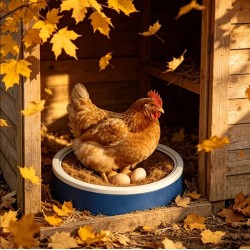
If one of your normally friendly hens suddenly refuses to leave the nest box, fluffs herself up and makes an impressive growling noise whenever you approach, there's a good chance you've got a broody hen.
Broodiness is completely natural. A broody hen has developed a powerful instinct to sit on eggs and hatch chicks. This can be extremely useful if you want to increase your flock, but it can also require a little management.
Understanding why hens become broody and knowing how to look after them can make the whole process much easier.
How Can You Tell If a Hen Is Broody?
A hen spending some time in a nest box isn't necessarily broody. She may simply be laying an egg.
A genuinely broody hen will usually remain on the nest for long periods and may return almost immediately when removed.
Common signs include:
-
Remaining in the nest box for much of the day.
-
Flattening herself over the eggs.
-
Puffing up her feathers when approached.
-
Growling, clucking or pecking defensively.
-
Becoming unusually protective of the nest.
-
Plucking feathers from her breast.
-
Leaving the nest only briefly for food and water.
-
Producing particularly large and unpleasant-smelling droppings.
-
Quickly returning to the nest when removed.
Some breeds are naturally more inclined towards broodiness than others. Silkies and Cochins, for example, are particularly famous for their maternal instincts.
Why Do Chickens Become Broody?
Broodiness is primarily controlled by hormones and the hen's natural reproductive instincts.
It commonly occurs during spring and summer when longer days and warmer weather create favourable conditions for raising chicks, although hens can potentially become broody at other times.
Seeing eggs accumulating in a comfortable nest may also encourage a broody-prone hen to settle.
Once she's committed, she's not simply being stubborn. Her instincts are telling her that those eggs need to be kept warm and protected until they hatch.
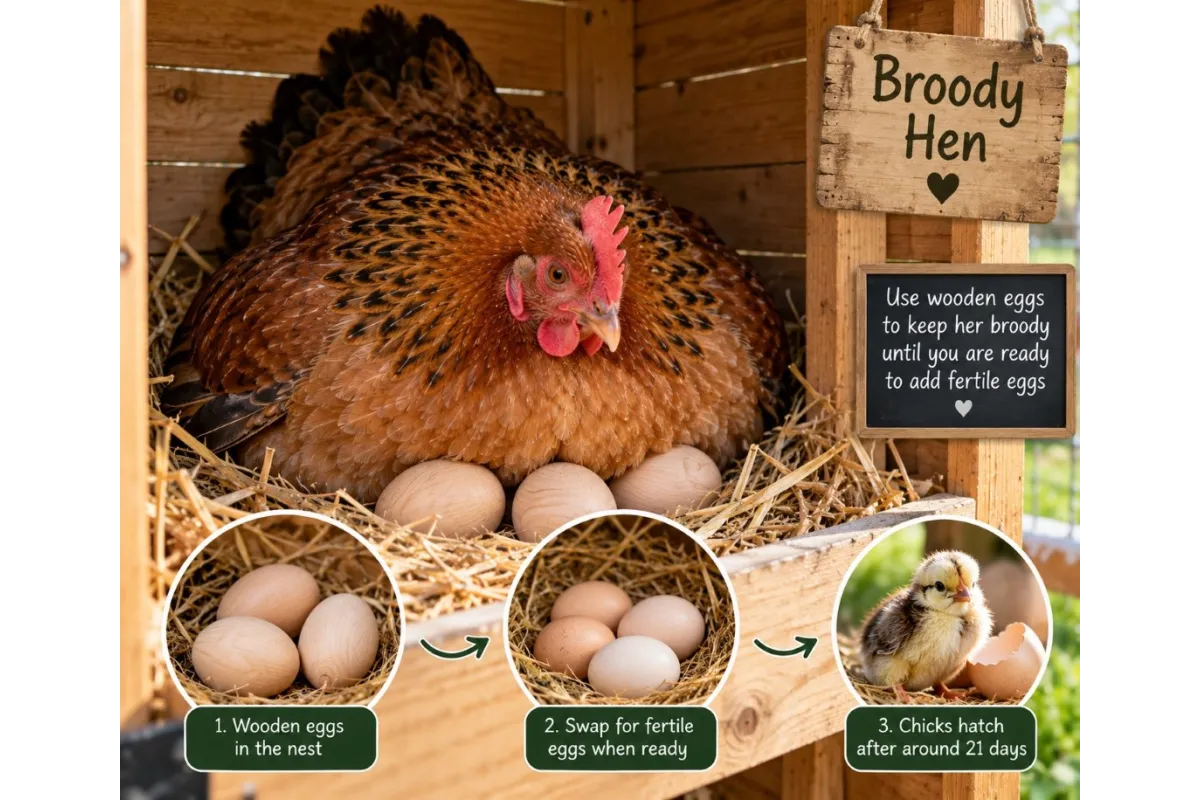
Chicken eggs normally take approximately 21 days to hatch, although there can be some variation.
If You Want Your Hen to Hatch Chicks
If you have suitable fertile eggs and would like some chicks, a reliable broody hen can provide a wonderfully natural alternative to using an incubator.
You can place suitable fertile eggs beneath her and allow nature to take its course.
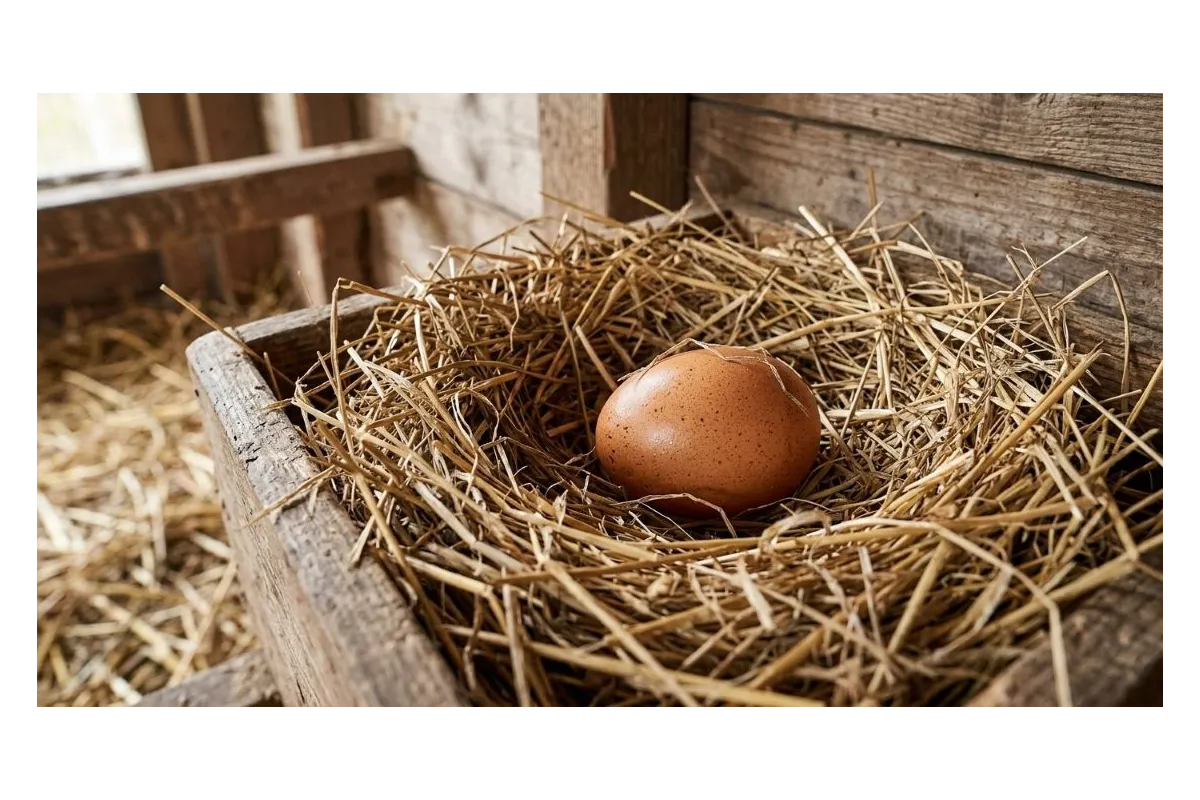
It's helpful to mark the eggs you're intentionally incubating with a pencil. Other hens may continue laying in the same nest, and marking the original eggs makes it easier to identify and remove any newcomers.
Ideally, the broody hen should have somewhere quiet and secure where she isn't continually disturbed by other chickens.
Make sure she has easy access to fresh drinking water and a balanced chicken feed.
She should periodically leave the nest to eat, drink, stretch, dust bathe and pass droppings.
Using Wooden Eggs With a Broody Hen
Wooden eggs can be extremely useful when managing a broody hen, particularly if you're planning to hatch chicks but aren't ready to give her valuable fertile eggs immediately.
When a hen first appears broody, you may want to make sure she's genuinely committed before placing fertile eggs underneath her.
Remove the real eggs and replace them with several wooden dummy eggs.
The hen can then continue sitting as though she's incubating a genuine clutch.
If she remains firmly broody for a few days, repeatedly returning to the nest and sitting reliably, you can be more confident that she's ready to incubate fertile eggs.
Once you're satisfied that she's committed, the wooden eggs can be removed and replaced with the fertile eggs you want her to hatch.
This can be particularly useful if you've purchased fertile hatching eggs and don't want to risk placing them beneath a hen who might abandon the nest the following day.
Wooden Eggs Can Help You Prepare a Clutch
Dummy eggs also give you a little more control over timing.
Suppose you want to collect fertile eggs from your own chickens over several days.
Rather than allowing the hen to begin incubating each real egg as it's laid, you can remove the genuine eggs and store suitable hatching eggs appropriately while leaving wooden eggs underneath her.
Once you have the number of fertile eggs you want, remove the dummy eggs and place the complete clutch underneath the hen at the same time.
This helps ensure that incubation begins at approximately the same point for all the eggs, improving the chances of the chicks hatching reasonably close together.
Swapping Wooden Eggs for Fertile Eggs
When you're ready to make the change, try to disturb the hen as little as possible.
Many chicken keepers find it easier to swap the eggs after dark, when the hen and the rest of the flock are settled.
Gently remove the wooden eggs and replace them with your fertile hatching eggs.
Avoid overcrowding the nest.
The hen needs to be capable of comfortably covering the entire clutch. If eggs are constantly sticking out from beneath her feathers, there may simply be too many.
Once the fertile eggs are in place, record the date so you can estimate when they're likely to hatch.
What If You Don't Want Chicks?
If you don't want chicks, there's little benefit in allowing a hen to spend weeks sitting on wooden eggs.
Dummy eggs are excellent for temporarily maintaining broodiness while preparing fertile eggs, but they obviously aren't going to hatch.
If chicks aren't part of your plans, collect real eggs frequently and gently encourage your hen away from the nest so she spends more time eating, drinking, scratching and interacting with the flock.
Removing access to her favourite nesting location for periods during the day may also help, provided other hens still have somewhere suitable to lay.
Some hens lose interest relatively quickly, while particularly determined birds may remain broody for considerably longer.
Keep an Eye on Her Health
A broody hen can be remarkably dedicated.
Unfortunately, that dedication means she may spend much less time eating, drinking and exercising than usual.
Check her condition regularly and make sure she's leaving the nest.
Keep food and clean water readily accessible, but avoid placing water where it could spill into the nesting material. Eggs and broody hens need a clean, dry environment.
Broody hens can lose weight, so monitoring body condition is important.
It's also worth checking for parasites such as red mites, particularly around the nest and perch areas.
If your hen appears weak, becomes excessively thin, stops eating or drinking, or otherwise seems unwell rather than simply broody, seek veterinary advice.
Don't Forget About the Rest of the Flock
A determined broody hen can take possession of the most popular nest box and defend it enthusiastically.
Unfortunately, the other hens may still want to lay there.
You could find two chickens squeezed into one nest box or discover eggs appearing in unusual places around the coop.
Providing additional comfortable nest boxes can help reduce competition.
If you're using wooden eggs beneath your broody hen, check the nest regularly for newly laid real eggs and remove them. This is particularly important once incubation of your chosen fertile eggs has started.
Broodiness Is Fascinating Natural Behaviour
A broody hen can certainly complicate your normal chicken-keeping routine, but she's demonstrating an instinct chickens have relied upon for thousands of years.
If you're hoping to hatch chicks, wooden eggs are a simple and useful tool. They allow you to test how committed your broody hen is, prepare a clutch of fertile eggs and coordinate the start of incubation without risking valuable hatching eggs unnecessarily.
Once your hen has proved she's serious, simply exchange the wooden eggs for fertile ones and let her take over.
Whether she's sitting determinedly on three wooden eggs or proudly covering a clutch of fertile ones, watching a broody hen at work provides a fascinating glimpse into the natural maternal behaviour of chickens.