Chicken eggs, just how are they made and how long does it take
How Is an Egg Produced in a Chicken? Understanding the Egg-Laying Process
Have you ever wondered how a chicken can produce a complete egg almost every day? From a tiny yolk developing inside the hen to the finished egg being laid, the process is remarkably complex. A chicken's reproductive system is specially designed to produce an egg in a relatively short period of time, with each part of the egg being added at a different stage.
For anyone who keeps backyard chickens, understanding how an egg is made can give you a fascinating insight into your hens and help you recognise what is normal when they are laying.
Where Does an Egg Start?
The production of an egg begins in the hen's ovary. A hen is born with thousands of tiny undeveloped ova, or potential egg yolks. During her laying life, individual ova gradually develop into yolks.
When a yolk is ready to be released, it leaves the ovary in a process called ovulation. Unlike mammals, where ovulation and fertilisation are closely associated with reproduction, a hen can lay an unfertilised egg. This is why hens can produce eggs even when there is no rooster in the flock.
The yolk then enters the oviduct, a long, winding tube through which the developing egg travels. The entire journey through the oviduct normally takes around 24–26 hours, although there can be some variation between individual hens.
Step 1: The Yolk Is Released
The first stage is ovulation. The mature yolk is released from the ovary and captured by the funnel-shaped opening of the oviduct, called the infundibulum.
The infundibulum is relatively short, and the yolk usually spends only around 15–30 minutes here.
If a rooster has mated with the hen, fertilisation can occur in this section of the oviduct. However, fertilisation is not necessary for an egg to continue developing. If there is no sperm present, the yolk simply continues its journey and eventually becomes an unfertilised egg.
Step 2: The Egg White Is Added
After leaving the infundibulum, the yolk moves into the magnum. This is the longest section of the oviduct and is where much of the egg white, or albumen, is added.
The egg white is extremely important because it surrounds and protects the yolk. It also provides water and protein for a developing embryo if the egg has been fertilised.
The yolk rotates and moves through the magnum while layers of albumen are deposited around it. This stage takes approximately two to three hours.
As the egg white is added, the egg begins to take on the familiar shape that we recognise.
Step 3: The Shell Membranes Are Formed
Next, the developing egg reaches the isthmus. Here, two thin but incredibly important membranes are added around the egg white.
These are known as the inner and outer shell membranes. They help protect the contents of the egg from bacteria and provide support beneath the hard outer shell.
The shell membranes also play an important role in forming the air space that you can see at the blunt end of a boiled egg.
The egg normally spends around one to two hours in the isthmus.
Step 4: The Eggshell Is Added
The next stage is one of the most fascinating parts of egg production. The egg enters the uterus, sometimes called the shell gland.
Although the egg is already recognisable by this stage, it does not yet have its hard outer shell.
Inside the uterus, calcium carbonate is deposited around the shell membranes. Layer after layer of calcium is added until the strong protective eggshell has been formed.
This is the longest stage of egg production and generally takes around 18–20 hours.
The hen obtains much of the calcium needed for eggshell production through her diet and from calcium reserves in her body. This is one reason why laying hens need access to an appropriate diet containing sufficient calcium. Oyster shell or another suitable calcium source is often provided separately to laying hens so they can consume what they need.
The shell is not simply a protective covering. It contains thousands of microscopic pores that allow oxygen and carbon dioxide to pass through. This is particularly important if the egg is fertilised and an embryo develops.
Step 5: The Egg Gets Its Colour
If the hen lays brown, blue, green or other coloured eggs, pigmentation is added during the later stages of shell formation.
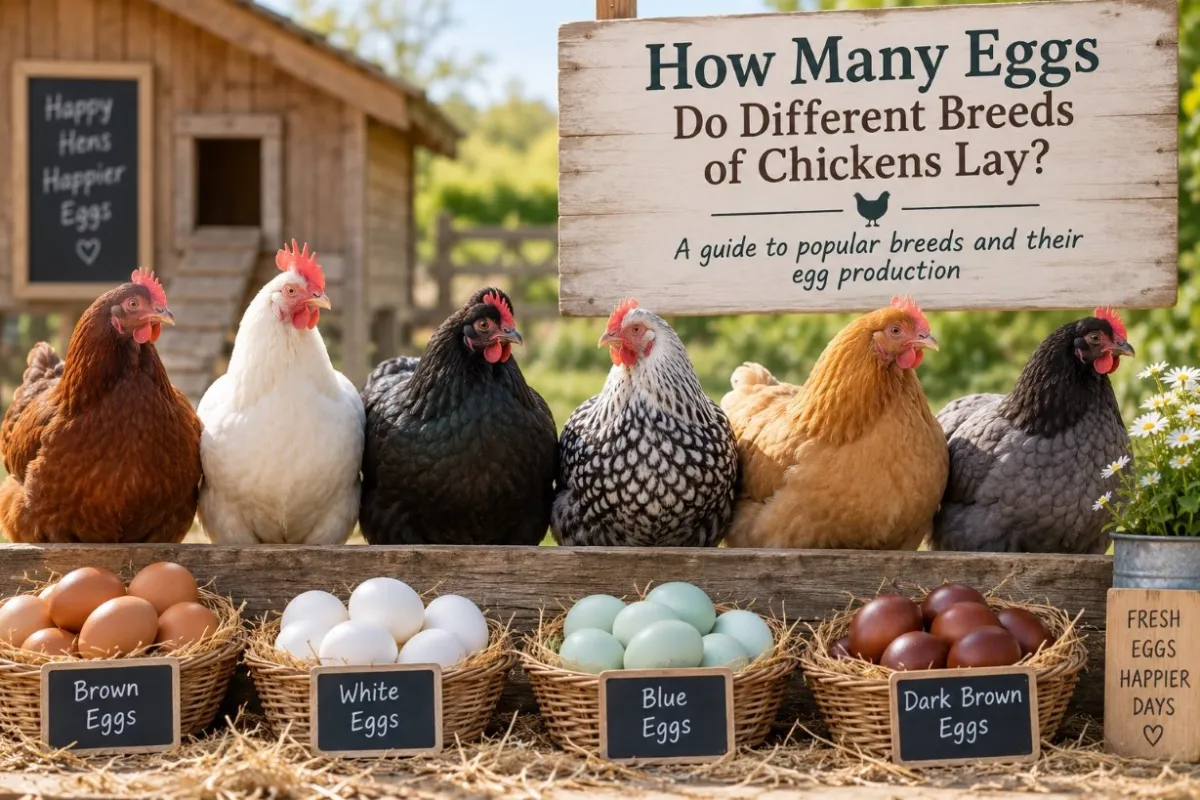
Different breeds produce different shell colours because of their genetics. Brown pigments are deposited onto the outside of the shell, while blue colouring is incorporated into the shell itself.
The colour and intensity can vary between hens and can even change slightly during a hen's laying cycle.
Step 6: The Egg Is Laid
Once the shell has been completed, the finished egg moves towards the end of the oviduct.
Just before laying, the egg rotates so that it is normally positioned with the larger, blunt end facing outward. The hen then contracts the muscles of the reproductive tract and lays the egg through the cloaca.
The process of laying an individual egg can be relatively quick, although hens may spend some time preparing themselves beforehand.
Once the egg has been laid, the cycle can begin again.
So, How Long Does It Take a Chicken to Make an Egg?
The complete process generally takes approximately 24–26 hours.
The timings can be roughly broken down as follows:
-
Ovulation and infundibulum: around 15–30 minutes
-
Magnum – egg white formation: around 2–3 hours
-
Isthmus – shell membranes: around 1–2 hours
-
Uterus – eggshell formation: around 18–20 hours
-
Final movement and laying: a relatively short period
These figures are approximate, and the exact timing can vary depending on the hen, breed, age, health, diet, daylight hours and other factors.
Why Doesn't a Hen Lay at the Same Time Every Day?
Because egg production takes roughly a day, a hen that lays regularly will usually lay her next egg a little later each day.
For example, if a hen lays an egg at 8am one day, she might lay the next one around 9am the following day. Eventually, the laying time moves later and later until the hen skips a day and the cycle starts again.
This is why a hen producing an egg every day does not necessarily lay at exactly the same time.
What Happens When a Hen Doesn't Lay?
Not every hen lays an egg every day. This is completely normal.
Young hens may take some time to establish a regular laying pattern. Older hens generally lay fewer eggs, while factors such as shorter winter days, moulting, stress, illness, changes in routine and nutrition can also reduce egg production.
The amount of daylight has a particularly strong influence on a hen's reproductive system. As the days become shorter, many hens naturally reduce or stop laying for a period of time.
A Remarkable Natural Process
The humble chicken egg is much more complicated than it first appears. In approximately one day, a hen can take a microscopic reproductive cell, develop a yolk, surround it with layers of albumen, add protective membranes, build a strong calcium-rich shell and, finally, lay the finished egg.
The next time you collect a freshly laid egg from your nesting box, remember that it has been through an extraordinary journey. From ovulation to laying, the entire process usually takes around 24–26 hours, and a healthy laying hen can repeat this remarkable process again and again.
For chicken keepers, understanding this process also highlights just how important good nutrition, adequate calcium, clean water, suitable housing and a low-stress environment are to supporting healthy egg production.