What should I use for the floor of my chicken run
The Best Substrate Options for a Chicken Run
Choosing the right substrate for your chicken run is an important part of keeping your flock healthy, comfortable and happy. The ground in a chicken run has to cope with scratching, dust bathing, droppings, spilled feed, rain and plenty of chicken traffic. A good substrate should help keep the area reasonably dry, reduce mud, provide opportunities for natural foraging and make cleaning and maintenance easier.
There is no single substrate that is perfect for every chicken keeper. The best choice will depend on the size of your run, the number of chickens you keep, the type of ground underneath, your local weather and how much maintenance you are prepared to do.
Here are some of the most popular chicken-run substrate options and what you need to know about each one.
1. Wood Chippings
Wood chippings are one of the most popular choices for chicken runs. They provide a natural-looking surface and give chickens plenty of material to scratch through while searching for insects and other interesting treats.
A good layer of wood chippings can help prevent the ground becoming muddy, particularly during wet weather. As the chippings break down, they can also contribute organic material to the ground.
However, it is important to choose suitable wood chippings. Avoid treated or chemically contaminated timber, painted wood and material containing potentially harmful additives. Large, sharp pieces should also be avoided.
Wood chippings work particularly well when laid over reasonably well-drained ground. They may need topping up periodically as they become compacted and decompose.
2. Bark Chippings
Bark chippings are another natural option and can be used in a similar way to wood chippings. They create a soft surface that chickens can scratch through and can help reduce the amount of mud in a run.
One potential problem is that bark can retain moisture, especially in a poorly drained run. If the run stays wet for long periods, the substrate can become compacted and begin to smell.
For this reason, good drainage is particularly important when using bark. Regularly turning the material with a rake can help keep it aerated and prevent excessively wet patches developing.
3. Hardwood Chips
Hardwood chips are often an excellent choice for a chicken run because they are relatively durable and can remain useful for a considerable amount of time.
They provide a natural scratching surface and can gradually break down into organic matter. Some keepers use a deep layer and allow it to compost naturally, periodically adding fresh material to the top.
This approach can work particularly well in larger runs. However, the run still needs monitoring. If the substrate becomes excessively wet, compacted or unpleasant-smelling, it is time to refresh or replace it.
4. Straw
Straw is inexpensive and widely available, making it an attractive option for chicken keepers. It can provide a comfortable surface and gives chickens something to scratch through.
However, straw is generally better suited to sheltered areas than permanently exposed runs. When it becomes wet, it can mat together and decompose relatively quickly.
Wet straw can also become dirty and unpleasant, so it needs replacing regularly. If you choose straw, keeping as much of the run protected from rain as possible can make it much easier to manage.
It is also worth remembering that straw and hay are not the same thing. Hay is primarily a dried grass feed and can encourage chickens to eat it, whereas straw is generally used as bedding or substrate.
5. Hemp Bedding
Hemp bedding is becoming increasingly popular among poultry keepers. It is absorbent, relatively lightweight and can provide a comfortable surface.
Hemp can be particularly useful in covered sections of a chicken run or around entrances where mud tends to develop.
The main disadvantage is cost. Hemp products can be more expensive than some bulk substrates, especially if you have a large run.
Nevertheless, its absorbency and ease of handling can make it worthwhile for keepers who want a relatively low-maintenance material.
6. Sand
Washed, coarse sand can be an excellent substrate for chicken runs when used correctly. It drains well, is easy to rake and can make removing droppings much easier.
One of the biggest advantages of sand is that chicken droppings can often be removed using a scoop or rake, rather like cleaning a cat litter tray. This can help keep the run looking cleaner.
Fine sand, however, is not ideal. Very fine material can become dusty, particularly when chickens are scratching and dust bathing. Choose a suitable coarse, washed product rather than builders' sand or material that may contain unwanted contaminants.
Sand can also become extremely hot in direct summer sunlight, so shade is essential.
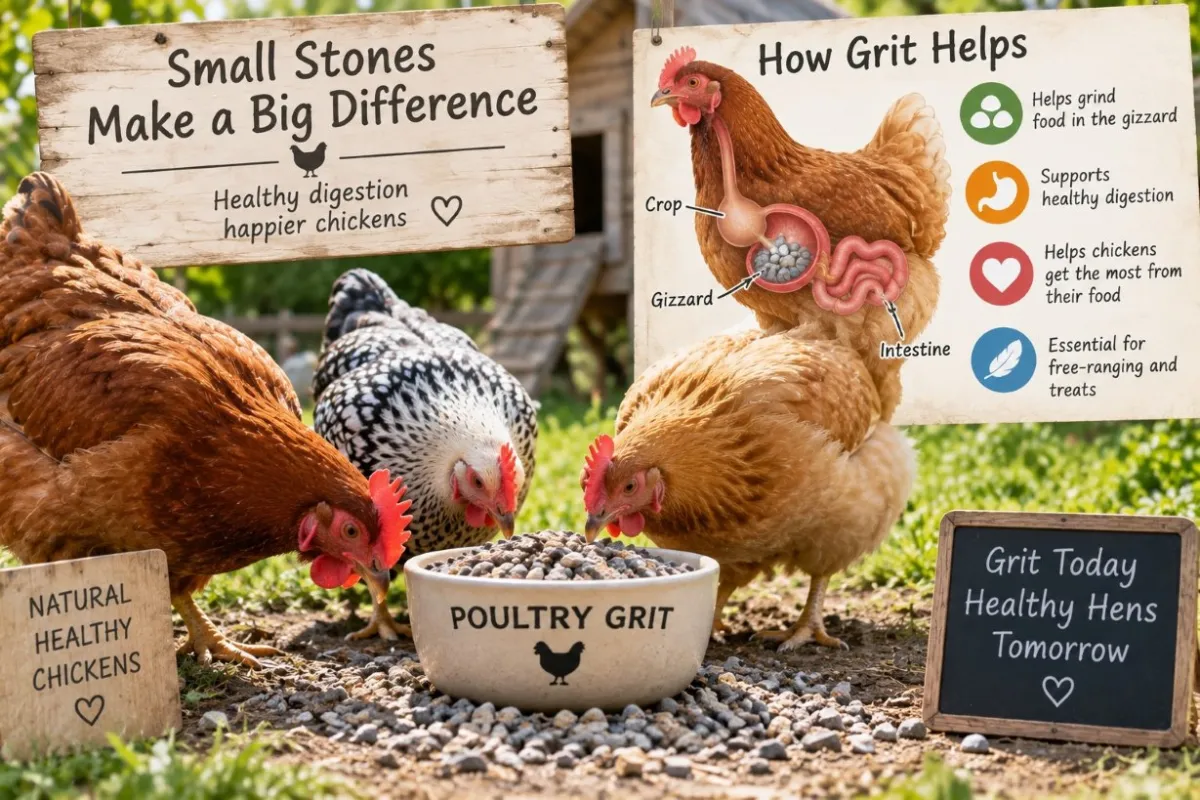
7. Gravel and Small Stones
Small rounded gravel can be useful in areas that suffer from drainage problems. It allows water to move through the surface and can help prevent persistent mud.
However, gravel is not always the most comfortable surface for chickens, particularly if the stones are large, sharp or uneven.
If gravel is used, choose smooth, appropriately sized material and make sure chickens have access to softer areas as well.
A gravel layer can also work well underneath another substrate, helping improve drainage while providing a more comfortable surface above.
8. Pea Gravel
Pea gravel is made up of small, rounded stones and is sometimes used in poultry runs because it provides excellent drainage.
It is relatively easy to rake and clean, and it does not decompose like organic substrates.
The disadvantage is that it provides little organic material for chickens to scratch through. It can therefore be beneficial to combine pea gravel with other natural materials or provide separate areas containing wood chips, leaves or other safe enrichment materials.
9. Leaf Litter
Natural leaf litter can be a fantastic addition to a chicken run, particularly if you have access to clean, untreated fallen leaves.
Chickens love scratching through leaves, searching for insects and other edible discoveries. Over time, the leaves break down and contribute organic matter to the ground.
Leaf litter should come from areas that have not been treated with pesticides or other chemicals. Avoid leaves from plants known to be poisonous to poultry.
Because leaves can become wet and compacted, they work best as part of a mixed substrate rather than as the only surface in a heavily used run.
10. The Deep-Litter Approach
Rather than removing all substrate frequently, some chicken keepers use a deep-litter system. This involves maintaining a relatively deep layer of organic material and regularly adding fresh material to the surface.
Common materials include wood chips, leaves and other suitable plant-based materials.
The chickens naturally scratch and mix the material, helping with aeration and decomposition. If managed properly, this can reduce the frequency of complete clean-outs.
However, deep litter is not simply a case of putting down a huge pile of material and forgetting about it. Moisture levels, smell, flies and general cleanliness need to be monitored carefully.
What About Bare Earth?
Bare earth may seem like the simplest option, and chickens certainly enjoy scratching directly in soil. Unfortunately, a heavily used run can quickly turn bare earth into a muddy, compacted area.
Rainwater can make the problem considerably worse, particularly around drinkers and entrances.
If you have a large, well-drained run with plenty of space, some bare earth can be beneficial because it allows natural scratching and dust bathing. For smaller runs, however, adding a suitable substrate can make a significant difference.
Should You Use More Than One Substrate?
Absolutely. In many cases, a combination of materials provides the best results.
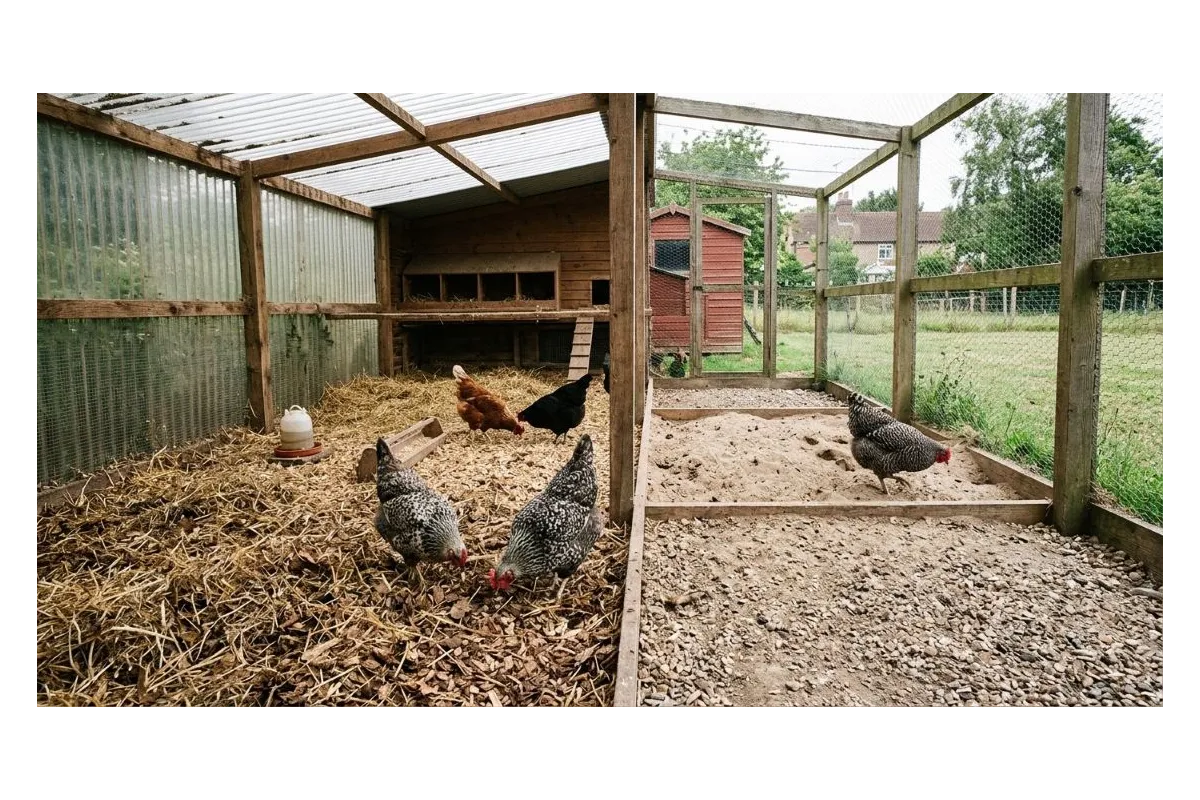
For example, you could use gravel or another free-draining material as a base in a problem area, followed by a layer of wood chippings. A covered section could contain hemp or another absorbent material, while a separate area could be maintained specifically for dust bathing.
Different areas of the run can serve different purposes. Chickens naturally enjoy scratching, dust bathing, exploring and foraging, so providing a variety of surfaces can make their environment more interesting.
Drainage Is Just as Important as Substrate
Even the best substrate will struggle if water cannot drain away.
Before choosing a substrate, look at your run after heavy rain. Are there puddles? Does water collect around the drinker? Is the entrance constantly muddy?
Improving drainage may be more effective than simply adding more substrate.
A covered roof over at least part of the run can also make a huge difference. Keeping rain away from the areas where chickens spend most of their time helps prevent organic substrates becoming saturated.
Keeping Your Chicken Run Clean
Whatever substrate you choose, regular maintenance is essential.
Remove obvious piles of droppings, spilled food and areas of heavily soiled material. Rake or turn organic substrates regularly to prevent them becoming compacted. Check for unpleasant smells, excessive moisture, mould or large areas of contamination.
Drinkers should ideally be positioned where they are less likely to spill onto the substrate. Feeders should also be kept clean and protected from rain.
A clean, dry run is much easier to maintain than one that is constantly wet and muddy.
Which Substrate Is Best?
For many chicken keepers, hardwood or suitable untreated wood chippings are an excellent all-round option. They provide a natural scratching environment, help control mud and can be relatively easy to maintain.
For runs with drainage problems, pea gravel or another suitable drainage layer may be useful. Sand can be a good choice for keepers who want a surface that is particularly easy to rake and clean, while hemp can work well in covered areas where absorbency is important.
Ultimately, the best chicken-run substrate is one that stays reasonably dry, is safe for chickens, drains appropriately and can be maintained easily.
Don't be afraid to experiment with different materials and combinations. Your chickens will quickly show you which areas they enjoy using, while regular observation will tell you whether the substrate is staying clean and dry.
A well-designed run with suitable substrate isn't just easier for you to look after — it gives your chickens a more comfortable, stimulating environment where they can scratch, forage, dust bathe and behave naturally.
You may also like