Chicken foot health
Why Chicken Foot Health Matters: What to Look For and How to Keep Your Hens’ Feet Healthy
When caring for chickens, it is easy to concentrate on their feathers, eggs, diet and general behaviour while overlooking one of the most important parts of their body — their feet. Healthy feet and legs are essential for chickens because they rely on them for walking, scratching, perching, dust bathing and exploring their surroundings.
Regularly checking your chickens’ feet can help you spot problems early, before a small irritation develops into a painful infection or causes difficulty walking. Fortunately, many common chicken foot problems can be prevented with good husbandry and a clean, dry environment.
Why Healthy Feet Are So Important
A chicken spends much of its day on its feet. Whether it is scratching around the run, searching for food, climbing onto a perch or simply walking between the coop and the garden, healthy feet are vital to its quality of life.
Foot problems can be particularly troublesome because chickens often try to hide signs of pain or illness. A hen may continue behaving relatively normally even when she has a sore foot. By the time you notice limping or a change in behaviour, the problem may already have become quite serious.
Checking the feet and legs regularly gives you the opportunity to identify changes such as swelling, redness, scabs, damaged scales, cuts or unusual growths.
What Healthy Chicken Feet Should Look Like
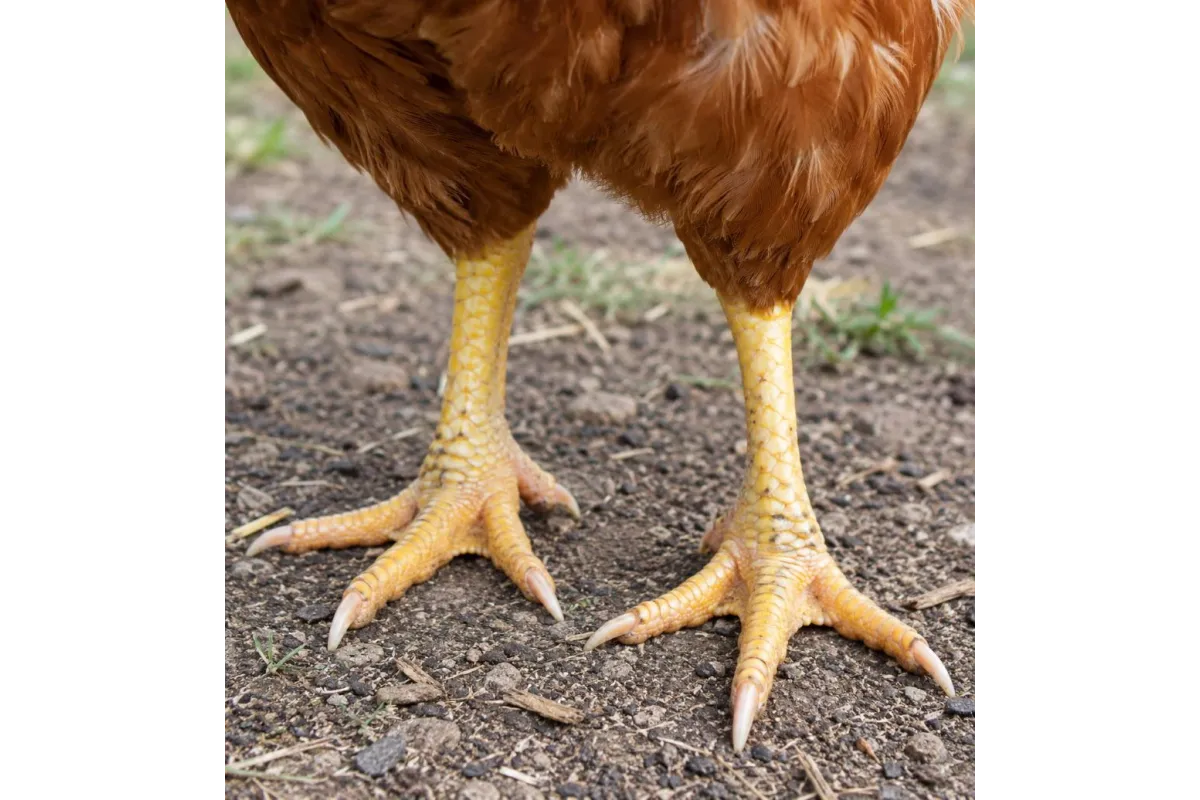
A healthy chicken's feet should generally be clean, free from significant swelling and comfortable-looking. The scales on the legs should lie relatively flat, although their exact appearance can vary between breeds and individual birds.
When checking your chickens, look at both feet and compare them with each other. This is often useful because a problem affecting one foot can be easier to spot when compared with the healthy one.
Look for:
-
Cuts, scratches or open wounds
-
Redness or swelling
-
Scabs or dark patches on the underside of the foot
-
Cracked or damaged claws
-
Overgrown toenails
-
Missing or damaged scales
-
Raised or lifted scales on the legs
-
Discharge or unpleasant smells
-
Lumps or unusual growths
-
Signs that the chicken is avoiding putting weight on one foot
You should also gently observe the chicken walking. A change in gait, reluctance to walk, repeated sitting down or favouring one leg can all indicate that something is wrong.
Bumblefoot: A Common Problem to Watch For
One of the best-known chicken foot problems is bumblefoot, a bacterial infection that affects the underside of the foot. It can develop when bacteria enter through a small cut, puncture or abrasion.
The first sign may be a small area of redness or swelling on the bottom of the foot. As the condition progresses, a dark scab or plug can develop, sometimes accompanied by swelling.
Bumblefoot should not be ignored. In more advanced cases, infection can spread deeper into the tissues and even affect the bones or joints.
Prevention is particularly important. Keep the chicken's living area clean and dry, remove sharp objects from the run and regularly inspect perches and flooring for anything that could cause injury.
If you suspect bumblefoot, particularly if there is significant swelling, heat, discharge or lameness, seek advice from a poultry-experienced veterinarian rather than attempting to cut into the foot yourself.
Scaly Leg Mites
Another common issue is scaly leg mite infestation. These tiny mites live beneath the scales of the chicken's legs and can cause the scales to become raised, rough and irregular.
In mild cases, you may notice that the scales look slightly lifted. More advanced infestations can cause thickened crusts, swelling and discomfort.
Scaly leg mites can be particularly persistent, so affected birds and their environment may require treatment. If several chickens develop similar symptoms, this can be a clue that mites are present within the flock.
Regular inspection makes it much easier to notice the early changes.
Don't Forget the Toenails
Chicken toenails naturally wear down through normal activity, particularly when birds spend plenty of time scratching and walking on suitable surfaces. However, occasionally a nail can become excessively long or damaged.
Overgrown nails can affect the way a chicken walks and may become caught on bedding, wire or other objects. Check the claws whenever you examine the feet.
If trimming is necessary, care needs to be taken because chicken nails contain a blood supply. If you are unsure how to trim them safely, ask an experienced poultry keeper or veterinarian for guidance.
Your Chicken's Environment Makes a Big Difference
Good foot health starts with good housing.
Wet, dirty or compacted bedding creates an environment where bacteria can thrive and can increase the risk of foot problems. Regularly clean the coop and replace soiled bedding. The run should also have areas where chickens can stand and walk without constantly being exposed to mud.
Sharp stones, broken wire, splintered wood and other hazards should be removed. Perches should be sturdy and appropriately sized, with no sharp edges or splinters.
Providing a varied environment also encourages natural movement and exercise, helping chickens maintain strong legs and feet.
Make Foot Checks Part of Your Routine
You don't need to carry out a lengthy examination every day. However, making regular foot checks part of your normal flock-care routine can make a significant difference.
Whenever you handle a chicken, take a quick look at its legs and feet. Check for anything unusual and compare both sides. During routine health checks, examine the underside of the feet as well as the legs and claws.
Early detection is one of the most valuable tools a chicken keeper has.
When Should You Seek Veterinary Help?
Contact a poultry-experienced veterinarian if a chicken has significant swelling, persistent lameness, an open wound, pus or discharge, a rapidly worsening foot problem, severe pain or difficulty standing.
A chicken that suddenly cannot bear weight on a leg should also be taken seriously, as the problem may involve more than the foot itself.
Avoid relying on home treatments when you are unsure of the cause. What looks like a simple sore foot may sometimes be an infection, injury or another underlying problem requiring appropriate treatment.
Healthy Feet Mean Happier Chickens
Your chickens' feet may not be the first thing you think about when checking the flock, but they are fundamental to their everyday lives. Healthy feet allow chickens to walk, scratch, perch and behave naturally.
A few minutes spent regularly checking their feet and legs can help you spot problems before they become serious. Combine regular inspections with clean, dry bedding, safe perches, a suitable run and good general hygiene, and you can greatly reduce the risk of many common foot problems.
For chicken keepers, healthy feet are quite literally the foundation on which a happy, active flock stands.