Sour Crop in Chickens: Causes, Symptoms and What Chicken Keepers Should Know
Sour Crop in Chickens: Causes, Symptoms and What Chicken Keepers Should Know
Keeping chickens means becoming familiar with their normal behaviour. When a normally enthusiastic hen suddenly becomes quiet, stops eating or develops an unusually swollen crop, it's understandable to be concerned. One possible cause is sour crop, a digestive problem chicken keepers should know how to recognise.
Sour crop occurs when the contents of a chicken's crop fail to empty normally and begin to ferment. Although mild cases may sometimes resolve, an abnormal crop can also be associated with an underlying problem, so persistent symptoms shouldn't be ignored.
What Is a Chicken's Crop?
The crop is a pouch located near the base of a chicken's neck and forms part of its digestive system.
When a chicken eats, food passes down the oesophagus and enters the crop, where it is temporarily stored before continuing through the digestive tract.
It's therefore perfectly normal for a chicken's crop to feel quite full in the evening. After a day of eating and foraging, you may even be able to see a noticeable bulge.
During the night, however, the crop should gradually empty.
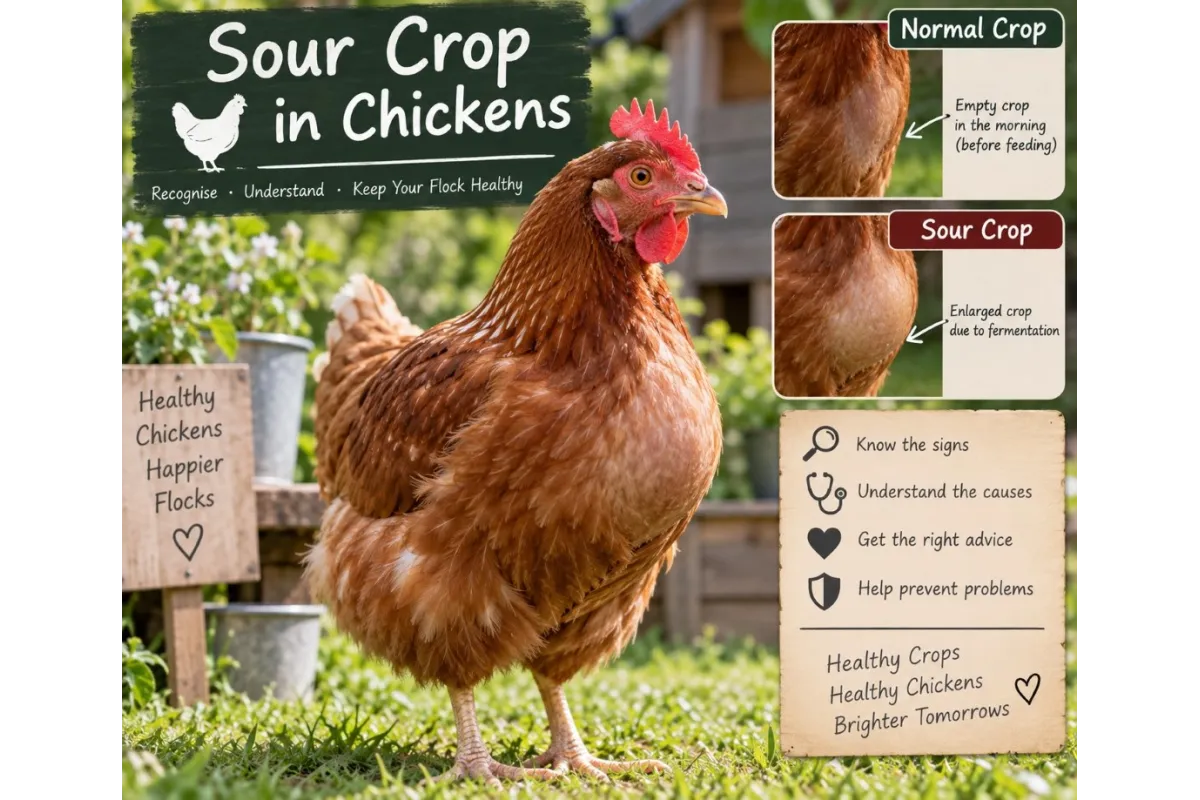
By the following morning, before the chicken has eaten, it should normally feel empty or almost empty.
Checking crops first thing in the morning is therefore one of the easiest ways of spotting a potential problem.
What Is Sour Crop?
Sour crop generally develops when food remains in the crop for too long, allowing fermentation and an overgrowth of microorganisms, commonly including yeast such as Candida.
Rather than being a single disease with one simple cause, sour crop can occur because normal crop emptying has been disrupted.
Possible contributing factors can include digestive obstruction or impaction, eating long fibrous material, abnormalities farther down the digestive tract, illness affecting gut movement, or other underlying health problems.
This is why repeatedly treating the crop without considering why it isn't emptying may fail to solve the problem.
Signs of Sour Crop
One of the most obvious signs is a crop that remains enlarged first thing in the morning.
Depending on its contents, it may feel soft, fluid-filled or unusually squishy rather than empty.
Other possible symptoms include:
-
A sour or unpleasant smell coming from the beak.
-
Reduced appetite.
-
Drinking differently from normal.
-
Lethargy or standing away from the flock.
-
Weight loss.
-
Reduced activity.
-
Abnormal droppings.
-
A swollen or pendulous-looking crop.
-
Regurgitation or fluid around the beak.
Not every chicken will show every symptom, and similar signs can occur with other crop and digestive disorders.
Sour Crop or Impacted Crop?
It's useful to understand the difference.
An impacted crop typically contains material that isn't moving through normally and may feel firm or packed.
A sour crop is associated with fermentation and may feel softer or more fluid-filled.
However, the two problems can be connected. Material trapped inside the crop can subsequently ferment, meaning a chicken may effectively have both an impaction and sour crop.
A crop that repeatedly fails to empty deserves investigation.
What Should You Do?
If you suspect a crop problem, check the chicken early in the morning before it has access to food. This gives you a much clearer idea of whether the crop has emptied overnight.
If it's still obviously enlarged, separate the affected bird somewhere calm where you can monitor eating, drinking and droppings.
Fresh water should remain available unless a veterinary professional specifically advises otherwise.
It's particularly important to avoid trying to force liquid from the crop by turning a chicken upside down. Chickens can inhale regurgitated material into their lungs, potentially causing serious aspiration problems.
Crop massage is also something to approach cautiously. If there is an obstruction or a crop full of fluid, vigorous manipulation could cause additional problems.
When Should You Contact a Vet?
Veterinary advice is sensible when a crop repeatedly fails to empty, the chicken appears unwell or you're unsure what's causing the problem.
Seek prompt professional help if the bird is weak, losing weight, struggling to breathe, repeatedly regurgitating, unable to eat or drink normally, or deteriorating.
A vet can assess whether you're dealing with sour crop, impaction or another underlying condition. Treatment depends on the cause and may involve addressing an obstruction, correcting dehydration or nutritional problems, and using appropriate medication when indicated.
Avoid automatically treating suspected sour crop with household remedies or human medicines. What appears to be a yeast problem may have another underlying cause.
Can Sour Crop Be Prevented?
Not every case can be prevented, but good flock management may reduce some risks.
Provide a balanced diet based around a suitable complete chicken feed and ensure constant access to clean drinking water. Chickens that consume foods requiring grinding should also have appropriate insoluble grit available.
Keep grass in chicken areas reasonably short. Long, tough strands of vegetation can potentially contribute to digestive problems when swallowed.
Regular observation is equally important.
Get into the habit of occasionally feeling your chickens' crops in the evening and again before breakfast. This helps you understand what's normal for your birds and makes abnormalities easier to recognise.
Know What's Normal for Your Chickens
Sour crop can initially be easy to overlook because chickens naturally have full crops towards the end of the day.
The important question is what happens overnight.
A crop that's full after a busy day of eating is usually normal. A crop that's still noticeably full the following morning before breakfast requires closer attention.
As with many chicken health problems, early recognition can make a significant difference. Spend a few minutes each day observing your flock, learn how healthy chickens normally look and behave, and investigate changes promptly.
Understanding the humble crop—and checking that it's doing its job—is another simple but valuable part of keeping a healthy, active and happy flock.