Winterising Your Chicken Coop: How to Keep Your Chickens Comfortable Through the Colder Months
Winterising Your Chicken Coop: How to Keep Your Chickens Comfortable Through the Colder Months
As autumn begins to disappear and temperatures start to fall, it's time for chicken keepers to think about preparing their coop and run for winter. Chickens are generally much more tolerant of cold weather than many people realise. Their feathers provide excellent insulation, and healthy adult chickens can cope remarkably well with low temperatures.
However, cold combined with damp conditions, draughts and poor ventilation can cause problems. Winterising your chicken coop isn't about turning it into a heated house. Instead, the aim is to provide a dry, well-ventilated and draught-protected environment where your flock can comfortably escape bad weather.
Here are some of the most important jobs to tackle before winter arrives.
Start With a Thorough Coop Inspection
Autumn is an ideal time to give your chicken house a complete inspection.
Check the roof for leaks and examine walls, doors and floors for damage. Wooden coops can deteriorate over time, particularly where rainwater regularly collects.
Look for loose boards, damaged roofing felt, rotten timber and gaps that may allow driving rain into the sleeping area.
Pay particular attention to the area around doors and nest boxes.
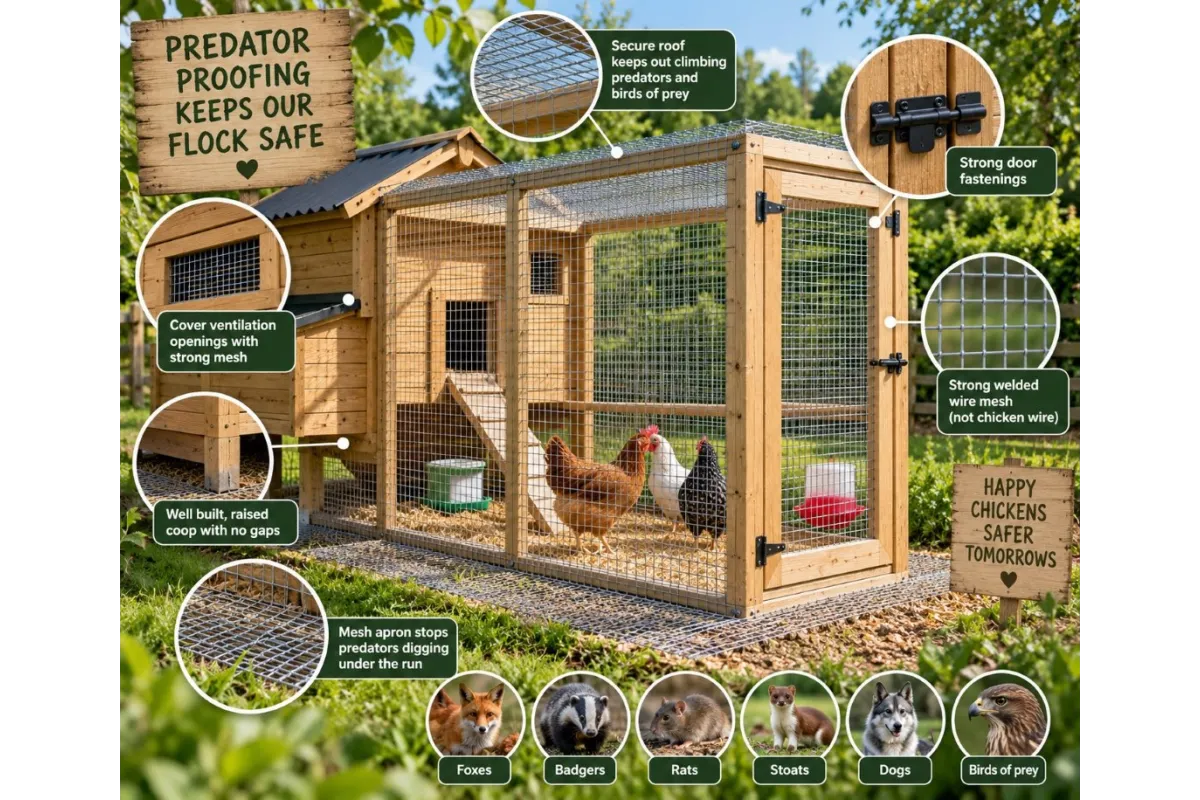
This is also a good opportunity to check your coop's security. Winter can be challenging for wildlife, and hungry predators may become increasingly interested in an enclosure containing chickens and food.
Check locks, hinges and welded wire mesh, and make sure nothing can easily dig underneath the enclosure.
Keep the Coop Dry
For most chickens, dampness is a greater winter concern than cold temperatures alone.
A leaking roof, wet bedding or condensation can create an unpleasant environment and potentially contribute to health problems.
Replace wet bedding promptly and investigate why it became wet.
Check that rain isn't entering through doors, nest boxes or ventilation openings. If your coop is raised from the ground, inspect underneath it too.
Bedding materials such as suitable wood shavings or chopped straw can help provide a comfortable floor, but whatever you choose needs to remain reasonably dry.
Adding huge amounts of bedding won't compensate for a leaking chicken house.
Fix the source of the moisture first.
Ventilation Is Essential
It might seem logical to close every opening when temperatures drop, but completely sealing a chicken coop can actually create problems.
Chickens produce moisture through breathing and droppings. Without adequate ventilation, this moisture can accumulate inside the coop.
The result can be condensation and stale, humid air.
The key is understanding the difference between ventilation and draughts.
Ventilation allows warm, moist air to escape, ideally through openings positioned above where the chickens roost.
A draught is cold air blowing directly across the birds while they're sleeping.
Your winter coop should therefore have good high-level ventilation without strong draughts at perch level.
Never permanently block ventilation holes simply because the weather has become colder.
Check the Perches
Chickens naturally roost together at night, and during colder weather this helps them conserve warmth.
Make sure there's sufficient perch space for the entire flock.
Wooden perches are generally preferable to metal because metal can become extremely cold.
A reasonably broad perch also allows a chicken to settle comfortably and cover its toes with its feathers while sleeping.
Check that perches are secure and free from sharp edges or damage.
Winter is also a good time to check carefully for red mites hiding around perch ends, joints and cracks. Don't assume parasites disappear simply because summer has ended.
Prepare the Chicken Run for Wet Weather
Winterising shouldn't stop at the coop door.
In the UK, winter chicken keeping often means dealing with rain, mud and more rain.
A chicken run that was perfectly pleasant during summer can quickly become a muddy mess once persistent wet weather arrives.
Consider covering part of the run with a waterproof roof so your chickens always have somewhere dry to scratch, feed and dust bathe.
Good drainage is also important.
If water regularly collects in one area, investigate whether drainage can be improved before winter.
Suitable run substrates such as hardwood woodchip can help in some setups, but avoid simply adding layer after layer of material to permanently waterlogged ground.
Provide a Dry Dust Bath
Chickens still want to dust bathe during winter.
Unfortunately, their favourite summer dust-bathing patch may turn into a puddle once the rain arrives.
Providing a covered dust bath allows your flock to continue this important natural behaviour throughout the colder months.
Place it underneath a covered section of the run and keep the material loose and dry.
You may be surprised how popular it becomes on a wet winter afternoon.
Prevent Drinking Water From Freezing
During particularly cold weather, chicken drinkers can freeze.
Check water at least daily and more frequently during freezing conditions.
Chickens must always have access to fresh drinking water.
Having two drinkers can be useful. One can be indoors thawing while the other is outside with the chickens, and you can simply swap them when necessary.
Avoid adding salt, antifreeze or other substances to chickens' drinking water in an attempt to prevent freezing.
Instead, use appropriate poultry-safe solutions and regular water checks.
Think About Feed Storage
Winter weather can also create problems with chicken feed.
Store feed somewhere cool, dry and secure from rodents.
A strong container with a secure lid can help protect feed from moisture and unwanted visitors.
Regularly clean up significant spillages around feeders, particularly overnight. Readily available chicken food can encourage rats and other rodents to visit.
Do Chickens Need Heating in Winter?
Healthy, fully feathered adult chickens generally don't require artificial heating in a properly designed coop during typical UK winter conditions.
Inappropriate heaters can introduce additional risks, particularly fire hazards.
Rather than trying to make the coop warm, concentrate on making it dry, ventilated and free from direct draughts.
There are exceptions. Very young birds, sick chickens, certain breeds or birds with unusual feathering may require different management. Extreme weather can also require additional precautions.
Always consider the needs of your particular flock.
Check Your Chickens Every Day
Winter is a time when regular observation becomes especially important.
Look at each bird and check that it's eating, drinking and behaving normally.
Pay attention to combs, wattles and feet during very cold weather and monitor body condition. Feathers can make a chicken appear much larger than it actually is, potentially hiding weight loss.
You may also notice egg production declining as daylight hours shorten. This can be perfectly normal because many hens naturally reduce or temporarily stop laying during winter.
A Little Preparation Makes a Big Difference
Winterising a chicken coop doesn't need to mean expensive modifications.
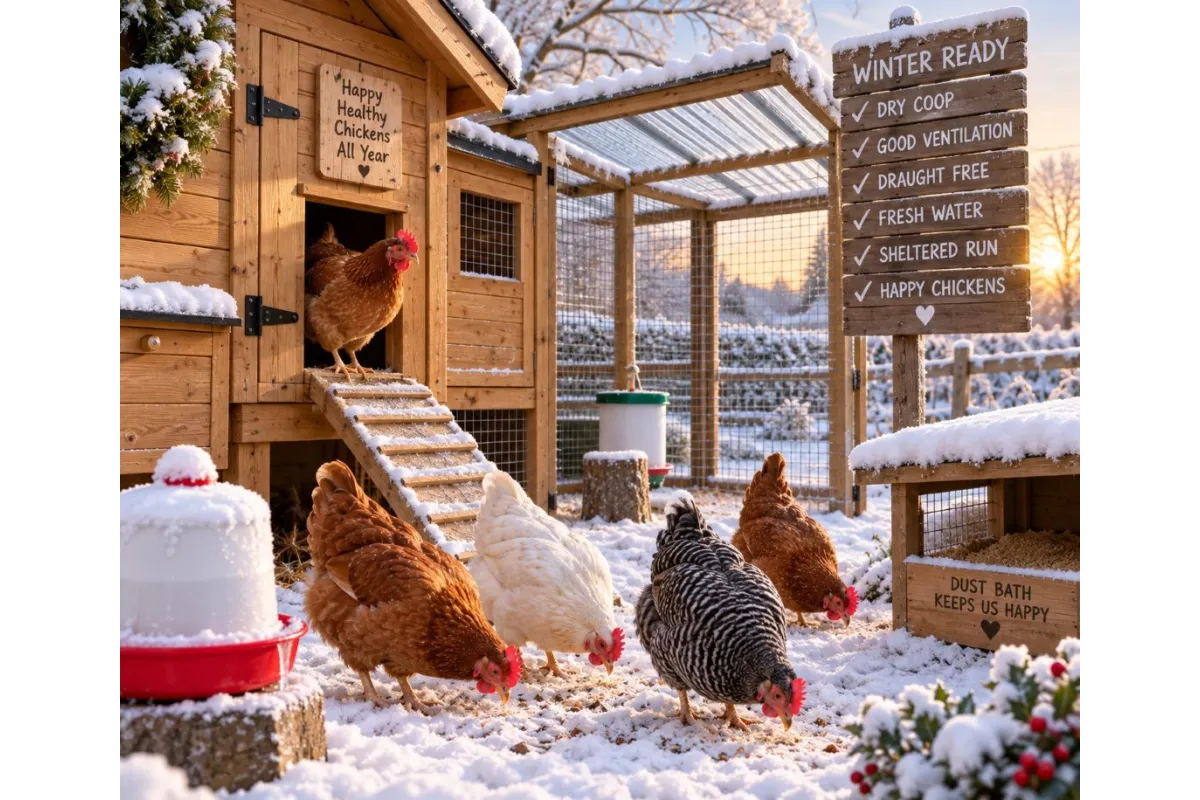
The most important priorities are straightforward: keep the coop dry, maintain good ventilation, eliminate direct draughts, provide clean bedding, prevent water from freezing and give chickens somewhere sheltered from persistent rain.
Start preparing during autumn rather than waiting until the first freezing night.
Repair the roof, inspect the mesh, secure doors, improve drainage and create a covered area within the run.
Once the worst winter weather arrives, you'll be glad you did.
Your chickens already come equipped with remarkably effective feather coats. Give them a secure, dry and well-maintained home, and they'll be in a much better position to comfortably scratch, cluck and forage their way through winter until the warmer days of spring return.