Wheat fodder, how to grow it and how to feed it to your chickens
Wheat Fodder for Chickens: How to Grow It at Home and Feed It Safely
If you are looking for a simple, inexpensive way to give your chickens a little extra variety in their diet, wheat fodder is well worth considering. Growing wheat into fresh green fodder at home requires very little space or equipment, and chickens generally love pecking at the young shoots and roots.
Wheat fodder can be particularly useful during the winter months when chickens have less access to fresh grass and other natural vegetation. However, it should be treated as a supplement rather than a replacement for a complete, balanced chicken feed.
What is wheat fodder?
Wheat fodder is simply wheat grain that has been allowed to sprout and grow into young green shoots. Instead of feeding the dry grain, you soak it, encourage it to germinate and then allow it to develop for several days.
The result is a mat of young green plants, roots and softened wheat grains. You can feed the whole mat to your chickens, allowing them to peck and pull it apart naturally.
Sprouting also makes the grain easier for chickens to eat and provides them with fresh plant material, which can add variety to their diet.
What do you need to grow wheat fodder?
One of the great things about growing wheat fodder is that you don't need a complicated setup.
You will need:
-
Whole wheat grains suitable for sprouting
-
A shallow tray or container
-
Clean water
-
A way of draining the excess water
-
A warm, reasonably bright location
Avoid using wheat that has been treated with pesticides or other chemicals intended to prevent germination. Choose clean, untreated grain intended for animal feed or sprouting.
A tray with drainage holes is particularly useful because standing water can encourage mould and unpleasant smells.
How to grow wheat fodder at home
Start by measuring out enough wheat to create a thin layer across your growing tray. Don't fill the tray too deeply because the grains need good airflow.
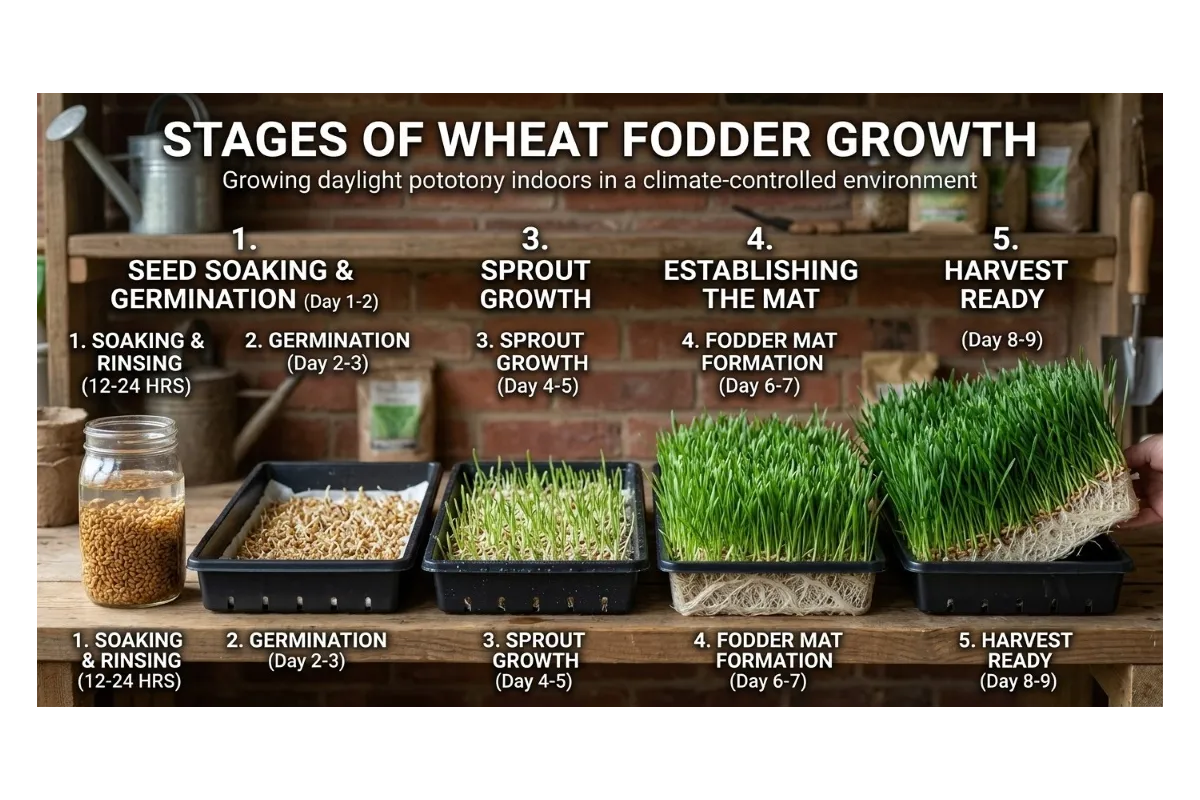
1. Soak the wheat
Place the wheat in a clean container and cover it with plenty of water. Leave it to soak for approximately 8–12 hours.
After soaking, drain the water thoroughly and rinse the wheat with clean water.
2. Spread the grain
Spread the soaked wheat evenly across your tray. A single layer or relatively shallow layer is best.
Keep the tray somewhere warm and out of direct, intense sunlight.
3. Rinse regularly
Rinse the wheat once or twice a day with clean water, making sure that excess water drains away completely.
Good drainage is important. The wheat should remain moist but shouldn't be sitting in water.
4. Wait for the shoots
Within a couple of days, you should see the wheat beginning to germinate. Small white roots will appear first, followed by green shoots.
Continue rinsing and draining each day.
Depending on temperature and growing conditions, the fodder is generally ready to feed after around 5–7 days. At this stage, you should have a green mat of shoots and roots.
How to feed wheat fodder to chickens
There are several ways you can offer wheat fodder.
The easiest method is to remove the entire mat from the tray and place it in the chicken run. Your hens can peck at the green shoots, pull at the roots and eat the softened grains.
You can also cut the fodder into smaller portions and place it in a feeder or scatter it around the run.
It is best to introduce fodder gradually if your chickens haven't eaten it before. Start with a small amount and see how they respond.
Remember that wheat fodder should complement a balanced poultry diet, not replace their normal complete feed. Chickens still need appropriate levels of protein, vitamins, minerals and other nutrients to remain healthy and productive.
How much wheat fodder should chickens have?
There isn't a single amount that suits every flock. Fodder should be viewed as a treat or supplementary feed rather than the main part of the diet.
A useful approach is to provide a modest portion alongside their normal feed and monitor how much they eat. Fresh fodder can also be offered as an activity, giving chickens something interesting to peck and explore.
If they begin leaving their regular feed because they are filling up on fodder, reduce the amount you provide.
Keeping your fodder healthy
The biggest problem when growing fodder at home is mould. If the wheat smells musty, looks mouldy or appears slimy, don't feed it to your chickens.
Clean your trays between batches and make sure there is good drainage and airflow. Avoid overcrowding the grain and don't allow water to collect underneath the tray.
Growing smaller batches more frequently is often easier than trying to produce a huge amount at once.
A simple addition to your chicken-keeping routine
Wheat fodder is an inexpensive and enjoyable way to provide chickens with fresh greenery throughout the year. With just wheat, water and a suitable tray, you can produce a new batch every week.
Whether you're looking to add variety to your hens' diet, provide something interesting for them to peck at during winter or simply enjoy growing your own chicken treats, wheat fodder is a straightforward project that most backyard chicken keepers can easily try at home.
Just remember: fresh, clean fodder in moderation alongside a complete chicken feed is the key.