Why Grit Is Essential for Healthy Chickens
Why Grit Is Essential for Healthy Chickens
If you are new to keeping chickens, you will quickly discover that their diet involves a little more than simply filling a feeder with layers pellets. Alongside good-quality feed and fresh water, there is another simple but extremely important addition your chickens may need – grit.
It might look like nothing more than a container of tiny stones, but grit plays an essential role in a chicken's digestive system. Understanding why chickens need grit, when to provide it and which type to use can help you keep your flock healthy and happy.
Why Do Chickens Need Grit?
Unlike humans, chickens don't have teeth. They cannot chew and grind their food before swallowing it.
Instead, chickens have developed a remarkably effective digestive system that does the grinding for them.
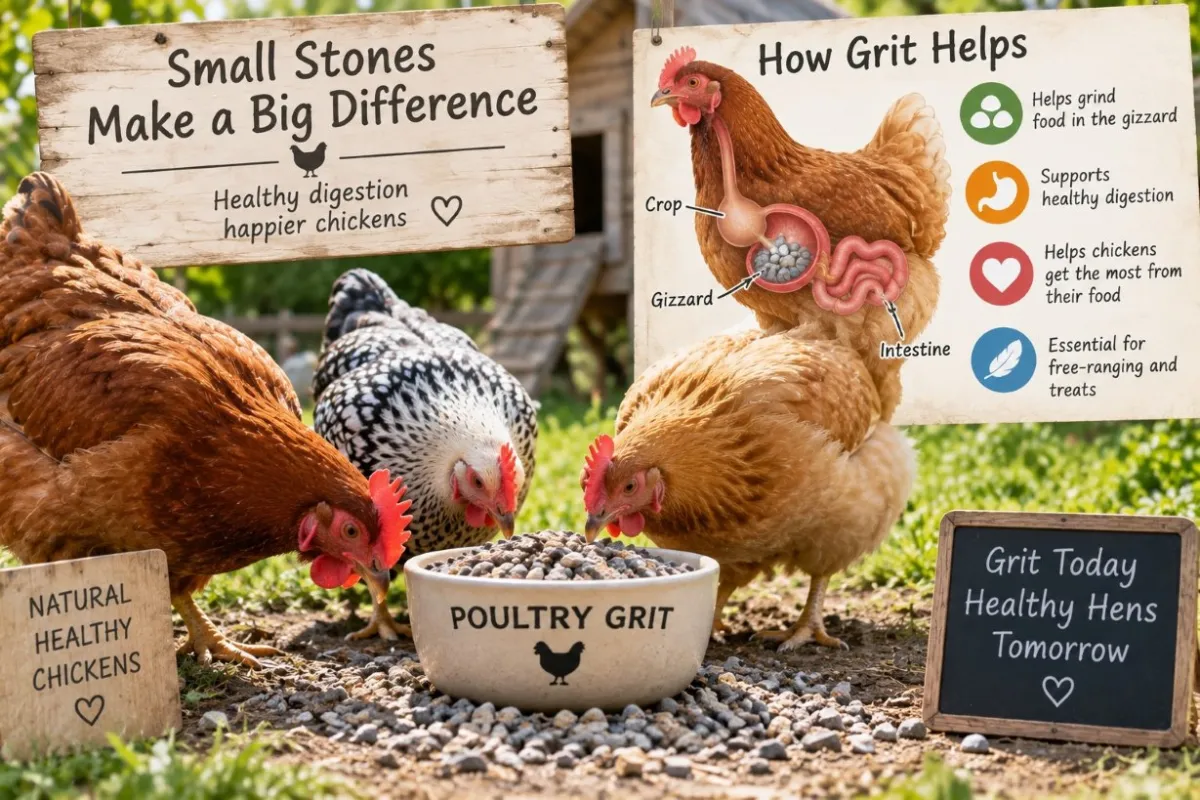
After a chicken swallows food, it passes through different parts of the digestive tract before reaching a powerful muscular organ called the gizzard.
The gizzard contracts and uses small pieces of hard grit stored inside it to grind food into smaller particles. You can think of these little stones as performing a similar job to teeth.
Without sufficient suitable grit, chickens may struggle to properly grind and digest certain foods.
What Is Chicken Grit?
Chicken grit generally consists of small, hard, insoluble stones, often made from materials such as granite or flint.
The word insoluble is important.
Insoluble grit doesn't simply dissolve inside the digestive system. Instead, pieces remain in the gizzard where they help grind food. Over time, the grit becomes worn down and eventually passes through the bird, which is why chickens need continued access to a fresh supply.
The size of grit required will depend on the age and size of the chicken. Chicks require much smaller particles than fully grown hens, so always choose a product appropriate for the age of your birds.
Don't Chickens Find Their Own Grit?
Sometimes they do.
Free-ranging chickens naturally scratch through soil and vegetation, picking up small stones and other suitable particles as they forage.
However, you cannot always guarantee that the ground contains enough grit of the correct size and hardness.
Chickens kept predominantly in an enclosed run may have even less opportunity to find suitable stones naturally, particularly if the run has a soft or covered substrate.
Providing poultry grit separately is therefore a simple way of ensuring it is available whenever your birds need it.
Do Chickens Eating Layers Pellets Need Grit?
If chickens are eating only commercially prepared pellets or mash, their need for additional grit may be lower because these feeds are already processed.
However, most backyard chickens eat more than their main feed.
They may consume vegetables, greens, seeds, insects and other treats. Free-ranging birds also find all sorts of natural foods while exploring.
Once chickens are consuming these types of foods, having access to appropriate insoluble grit becomes particularly important.
For most keepers, providing a container of grit and allowing the chickens to take what they need is an easy solution.
Grit and Oyster Shell Are Not the Same Thing
One of the most common areas of confusion for new chicken keepers is the difference between grit and oyster shell.
They perform completely different jobs.
Insoluble grit is used in the gizzard to help physically grind food.
Oyster shell, on the other hand, is a soluble source of calcium. Laying hens need plenty of calcium to produce strong eggshells, and oyster shell gradually dissolves within the digestive system so that calcium can be absorbed.
Some poultry products contain a mixture of grit and shell, but it is important to understand why each ingredient is being offered.
How Should You Give Chickens Grit?
One of the easiest methods is to provide grit in a separate container or grit feeder rather than mixing large quantities directly into the chickens' normal food.
Chickens are surprisingly good at regulating their own intake and will generally take grit when they require it.
Position the container somewhere dry and accessible. Check it regularly and top it up when necessary.
Keeping grit separate also allows you to see whether your flock is using it and prevents unnecessary amounts from becoming mixed with or wasted alongside their regular feed.
What About Chicks?
Chicks also require suitable grit if they are eating anything other than an appropriate complete chick crumb.
However, adult poultry grit is usually too large for very young birds.
If chicks are being given treats or other foods that require grinding, provide chick-sized grit specifically designed for their age.
As the birds grow, they can gradually move onto larger grades.
A Small Addition With a Big Job
Grit may be one of the least exciting things you purchase for your chickens, but inside the gizzard those tiny stones perform an incredibly important job.
By helping chickens grind food effectively, insoluble grit supports their natural digestive process and allows them to deal with the varied foods they encounter while scratching and foraging.
Whether your chickens spend their days free-ranging around the garden or live primarily in a secure run, keeping a supply of appropriate poultry grit available is a simple and inexpensive part of good flock management.
Alongside a balanced diet, clean drinking water, suitable housing and appropriate calcium for laying hens, grit helps provide your chickens with what their digestive system needs to work as nature intended.