Fireworks and Chickens: How to Reduce Noise, Fear and Stress
Fireworks and Chickens: How to Reduce Noise, Fear and Stress
Fireworks can be an enjoyable part of celebrations such as Bonfire Night and New Year's Eve, but the sudden bangs, flashes and vibrations can be frightening for animals – including chickens.
While we understand where the noise is coming from, chickens don't. A sudden explosion nearby can trigger their natural response to danger, potentially causing panic and stress. Fortunately, there are several simple things chicken keepers can do to help their flock feel safer when fireworks are expected.
How Do Fireworks Affect Chickens?
Chickens are naturally alert to potential predators and unexpected disturbances. Loud, unpredictable noises can therefore cause them to become frightened.
A startled chicken may suddenly run, flap or attempt to hide. In the confined space of a coop, panicking birds could potentially collide with walls, perches or other chickens.
Signs that your chickens are stressed may include unusual vocalisation, restlessness, huddling together, reluctance to leave the coop, reduced appetite or changes in normal behaviour.
Some hens may also temporarily reduce their egg production following a stressful event.
Secure Chickens Before Fireworks Begin
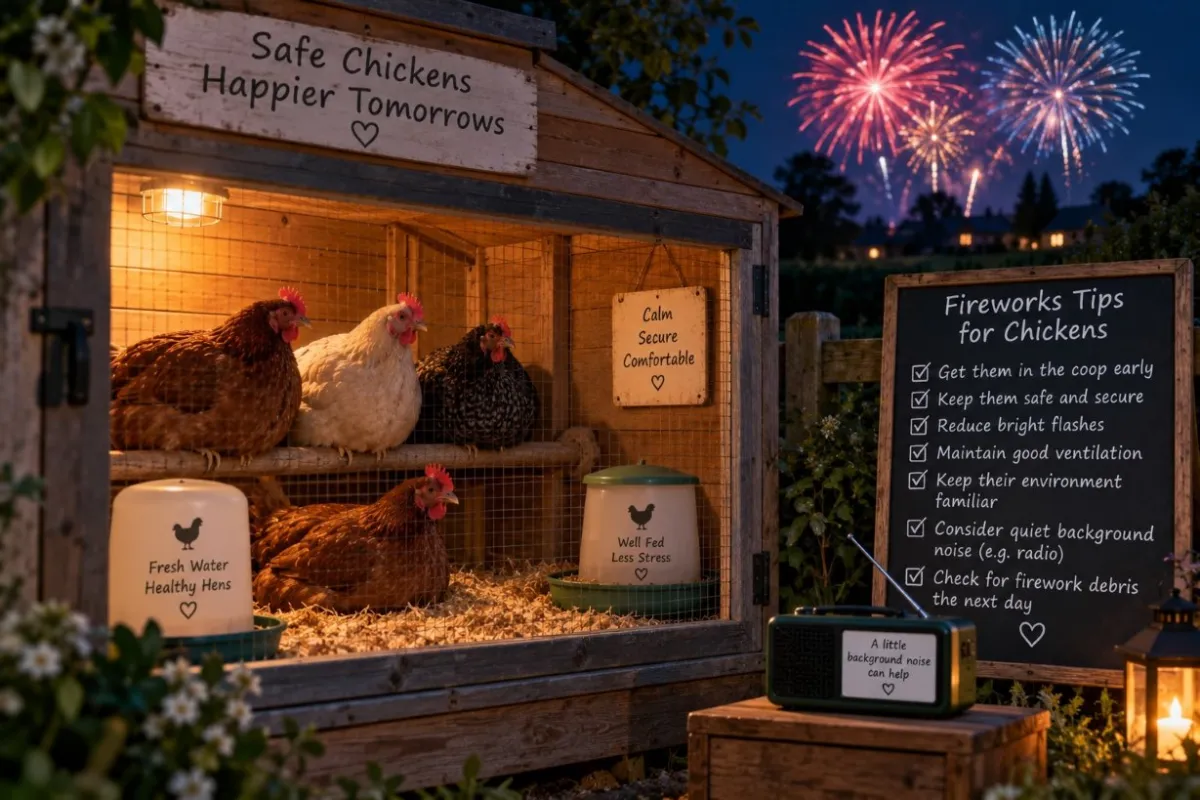
If you know that fireworks are likely in your area, consider getting your chickens safely into their coop before the displays begin.
If your flock normally returns to the coop around dusk, check that everyone is inside and settled before loud fireworks start.
Secure doors and check the coop and run for anything that could become dangerous if the birds panic.
Keeping chickens safely inside their familiar coop also prevents a frightened bird from attempting to escape from the run.
Reduce Flashes and Noise
A well-designed chicken coop already provides some protection from outside sights and sounds.
Closing doors and windows where appropriate can reduce flashes of light and help soften the noise. However, never block essential ventilation. Good airflow remains important, even when trying to reduce outside disturbances.
If your coop has windows, you could temporarily cover them to reduce flashes, provided this doesn't interfere with ventilation.
Avoid completely covering the coop with heavy blankets or other materials that could restrict airflow or create a fire risk.
Keep Their Environment Familiar
Firework night isn't a good time to make major changes to your chickens' environment.
Keep their normal bedding, perches and familiar surroundings in place. Chickens generally feel more secure when their environment is predictable.
Make sure they have access to clean drinking water and their normal feed.
A thick layer of appropriate bedding can also help create a comfortable environment while absorbing some sound and vibration.
Consider Gentle Background Noise
If electricity is safely available near your chicken housing, quiet background sound may help disguise some of the distant bangs.
A radio played at a low, comfortable volume can provide steady background noise. Introduce this beforehand rather than suddenly playing unfamiliar sounds loudly on the night.
The objective is to soften the contrast between silence and sudden explosions – not replace one loud noise with another.
Check Your Chickens Calmly
It can be tempting to repeatedly enter the coop to check that your birds are all right, but constantly disturbing them may prevent them from settling.
Check the flock when necessary, but try to remain calm and quiet. If your chickens are safely perched and settled, it may be better to leave them undisturbed.
After the fireworks have finished, check your birds for any signs of injury or unusual behaviour.
Don't Forget the Morning After
Firework debris can sometimes land surprisingly far from where it was launched.
Before allowing your chickens to free-range the following morning, inspect the garden and run for spent fireworks, plastic, wire, cardboard or other debris that could potentially be swallowed or cause injury.
Also observe your chickens over the following day. Most birds should quickly return to their normal routine, but prolonged changes in eating, drinking, movement or behaviour deserve closer attention.
Preparation Can Make a Big Difference
You can't completely eliminate the sound of fireworks, but you can make your chickens' environment feel considerably safer.
Getting the flock into the coop early, reducing flashes, maintaining ventilation, keeping their surroundings familiar and checking for firework debris the following morning are all simple precautions.
Most importantly, prepare before the first firework goes off. A secure, familiar and comfortable coop gives your chickens somewhere they already recognise as safe – helping them get through a noisy evening with as little stress as possible.