
Where Did Chickens Come From? The Fascinating History of the Domestic Chicken
Where Did Chickens Come From? The Fascinating History of the Domestic Chicken
Today, chickens are one of the most familiar animals in the world. From small backyard flocks to traditional farms, they can be found in almost every corner of the globe. But have you ever looked at your hens scratching around the garden and wondered where chickens originally came from?
The story of the chicken stretches back thousands of years and begins not in a European farmyard, but in the tropical forests of Asia.
Where Did Chickens Originally Come From?
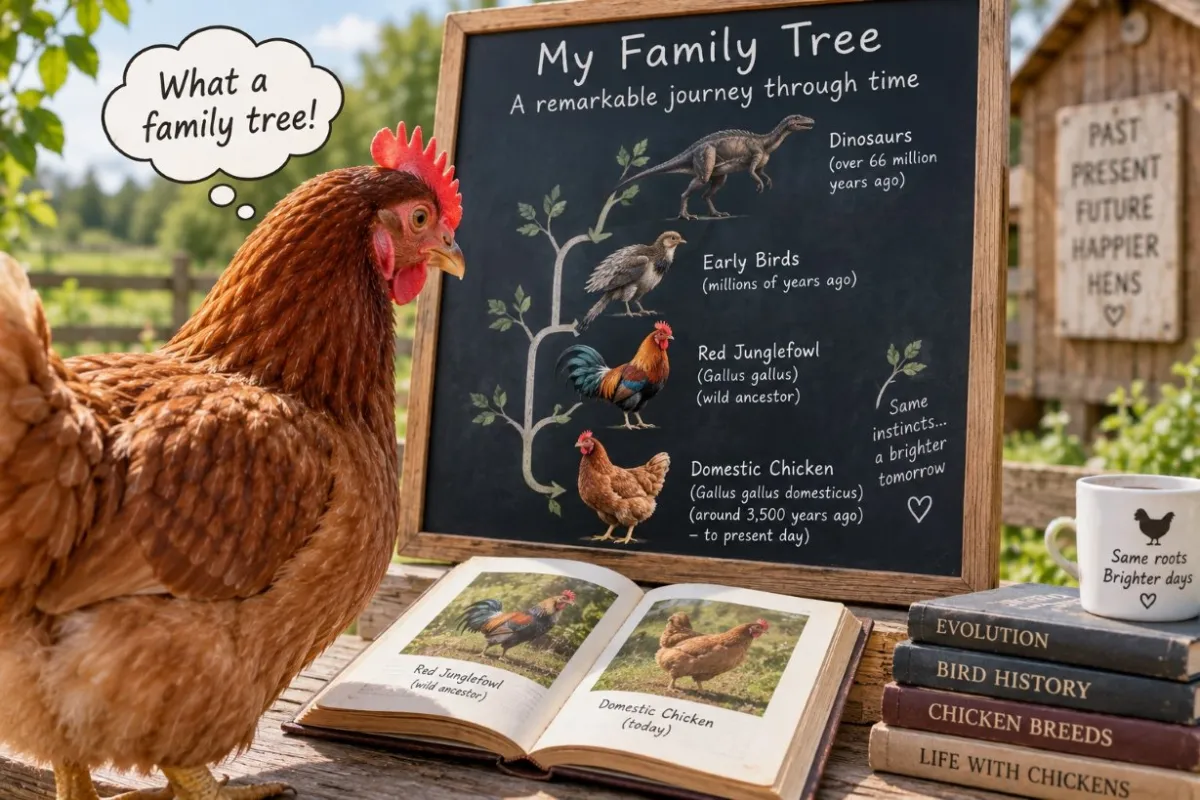
The domestic chicken, scientifically known as Gallus gallus domesticus, is primarily descended from the red junglefowl, Gallus gallus.
Red junglefowl still live in parts of South and Southeast Asia today. At first glance, they can look surprisingly similar to some domestic chickens, particularly the males with their bright red combs, colourful plumage and impressive tail feathers.
Unlike modern chickens living in coops and runs, their wild ancestors inhabited forests and areas with dense vegetation. They would forage on the ground for seeds, insects, fruits and other foods before seeking safer places to roost.
This ancient forest lifestyle helps explain many behaviours we still see in our chickens today.
When your hens scratch through soil looking for food, take a dust bath, forage among vegetation or fly onto a perch to sleep, they are displaying behaviours inherited from their wild ancestors.
How Long Have Chickens Existed?
This question has two different answers depending on whether we are talking about the ancestors of chickens or the domesticated chickens we recognise today.
Birds themselves have an extraordinarily ancient evolutionary history, with modern birds belonging to the dinosaur lineage that survived the mass extinction around 66 million years ago.
However, the domestic chicken is much more recent.
Current archaeological research suggests that chicken domestication began approximately 3,500 years ago, with some of the strongest early evidence coming from Southeast Asia.
This is interesting because older theories suggested that chickens had been domesticated considerably earlier. Improvements in archaeological dating and analysis have helped researchers reassess some supposed ancient chicken remains.
Why Did Humans Start Keeping Chickens?
It is tempting to assume people first domesticated chickens because they wanted a regular supply of eggs.
The reality may have been more complicated.
Researchers have suggested that changes in agriculture could have brought wild junglefowl into increasingly close contact with humans. As rice and other crops were cultivated, the resulting food sources may have attracted junglefowl to human settlements.
Over generations, some birds may have become increasingly accustomed to living close to people.
Early chickens may also have been valued for cultural, social or ceremonial reasons rather than simply being viewed as a source of food.
Eventually, however, their ability to provide eggs and meat helped make chickens extremely useful domestic animals.
How Did Chickens Spread Around the World?
Once domesticated, chickens gradually travelled alongside people.
Trade routes, migration and expanding settlements helped chickens move from Southeast Asia into other parts of Asia and eventually towards the Middle East, Africa and Europe.
Their spread did not happen overnight. Chickens reached different regions at different times, and their role within societies changed along the way.
As people began selectively breeding chickens, different characteristics became more pronounced. Some birds were selected for egg production, others for size, appearance, temperament or other useful qualities.
Over many generations, this helped create the extraordinary diversity of chicken breeds we have today.
From Junglefowl to Modern Laying Hens
Compare a wild red junglefowl with a modern high-production laying hen and the influence of selective breeding becomes obvious.
Wild birds naturally lay eggs primarily as part of their reproductive cycle. Humans, however, gradually selected chickens that laid more frequently.
Modern laying breeds and hybrids can potentially produce hundreds of eggs per year, far more than their wild ancestors would naturally produce.
Selective breeding has also created enormous variation in appearance.
Today we have tiny bantams, enormous Brahmas, fluffy Silkies, beautifully patterned Wyandottes, productive Leghorns and many other breeds.
Chickens can have different feather colours, body shapes, comb types, personalities and even egg colours.
Yet underneath these differences are many of the instincts inherited from their jungle-dwelling ancestors.
Chickens and Dinosaurs
You've probably heard someone describe chickens as "modern dinosaurs", and there is genuine evolutionary science behind the phrase.
Birds are the surviving descendants of a group of dinosaurs called theropods. This means that a chicken isn't simply related to dinosaurs in the distant sense that all animals share ancestors – birds actually belong to the dinosaur evolutionary lineage.
Of course, the domestic chicken did not exist millions of years ago. Its distant ancestors evolved gradually over an enormous period of time before eventually giving rise to the birds from which today's chickens descended.
It certainly gives you something to think about when watching a hen chase an insect around the garden!
Thousands of Years Beside Humans
Although chickens as domestic animals have been with us for only a tiny fraction of the Earth's history, their relationship with people stretches back thousands of years.
From wild junglefowl living among the forests of Southeast Asia to the remarkable variety of chickens found in gardens and farms today, their story has been shaped by evolution, agriculture, trade and human selection.
Modern chickens may look very different from their wild ancestors, but many ancient behaviours remain.
Every time your chickens scratch through the ground, search for insects, dust bathe or jump onto a perch at night, you are seeing instincts with roots stretching back long before the first chicken coop was ever built.
So next time you watch your flock wandering around the garden, remember: behind the familiar farmyard chicken lies a fascinating history involving tropical forests, ancient civilisations and even dinosaurs.